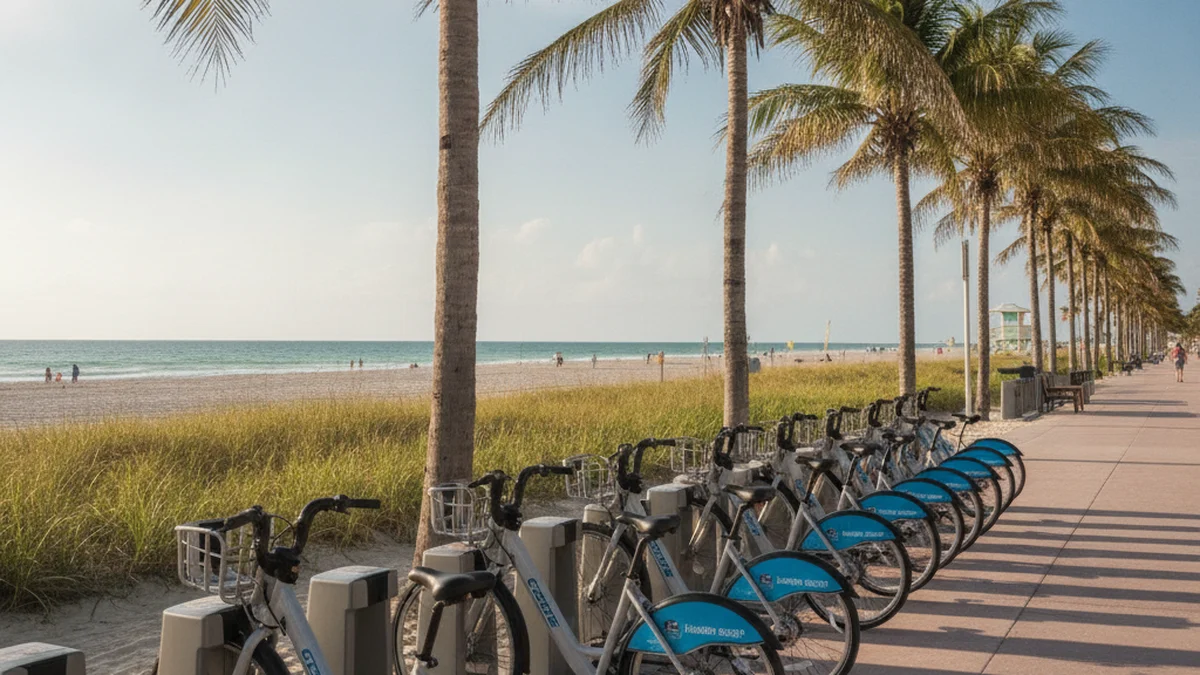
Florida’s warm climate, scenic waterfronts, and year-round tourist traffic have made rented and app-based shared e-bikes a fixture in cities from Orlando to Naples. Visitors exploring International Drive, riders cruising Fort Lauderdale’s A1A beach corridor, or vacationers on Naples’ beachside paths may never own an e-bike—yet they find themselves operating one at speeds that can cause serious injury when something goes wrong. When a crash happens on a rental or shared e-bike, identifying who is legally responsible is rarely straightforward, and the paperwork a rider signed at pickup complicates matters further.
This article explains the landscape of liability in Florida rental and share e-bike accidents, the defenses companies use to limit their exposure, and why speaking with an attorney early can make a significant difference in how a claim unfolds. For a broader overview of Florida e-bike injury claims, see the firm’s e-bike accidents practice page.
How Florida Law Classifies E-Bikes and Who Must Follow the Rules
Under § 316.003(3), Fla. Stat., Florida divides electric bicycles into three classes. Class 1 e-bikes provide pedal assist only and stop assisting at 20 mph. Class 2 e-bikes add a throttle but also cut motor power at 20 mph. Class 3 e-bikes provide pedal assist up to 28 mph and are subject to additional path restrictions. Most rental fleets operate Class 2 or Class 3 units, and the class affects where the bike may legally be ridden.
§ 316.20655, Fla. Stat. gives e-bike riders the same rights and duties as conventional bicycle riders. That means the full suite of bicycle traffic rules under § 316.2065, Fla. Stat. applies: riders must follow the rules of the road, use lights at night, and—if the rider is under 16—wear a helmet. Rental companies and share programs are not exempt from these requirements, and they take on additional responsibilities related to the mechanical condition of the equipment they place in service.
Potential Sources of Liability After a Rental or Shared E-Bike Crash
Liability in a rental or share crash can rest with more than one party, and the facts of the specific incident determine who bears responsibility.
- The rental or share company. A company that places e-bikes into service owes a duty to maintain them in a safe, rideable condition. Worn brake pads that fail under normal stopping pressure, degraded tires that blow out on pavement, a throttle mechanism that sticks, or a battery that overheats and causes a sudden loss of power are examples of mechanical defects a company should have caught through routine inspection. If poor maintenance caused or contributed to a crash, the company may be liable for the resulting injuries. Inadequate instruction—failing to show a first-time rider how to operate the throttle or engage the motor assist—can also support a negligence claim.
- A third-party driver or other negligent party. Many e-bike crashes involve a motor vehicle. A driver who fails to yield, cuts off a rider on Sarasota’s Tamiami Trail, or opens a car door into the bike lane without checking may bear primary responsibility regardless of whether the injured rider was on a personal or rented e-bike. Third-party liability claims against a driver’s automobile insurer follow the same principles as any bicycle-versus-vehicle collision.
- The rider. Under Florida’s modified comparative negligence rule, § 768.81, Fla. Stat., a rider who is found partially at fault sees their recovery reduced by their percentage of fault. A rider found to be more than 50 percent at fault recovers nothing. A rental company or its insurer will frequently argue that the rider was operating the bike recklessly or failed to follow instruction—because reducing the rider’s recovery is in the company’s financial interest.
Liability Waivers and Arbitration Clauses in Rental Agreements
Before mounting a rental or shared e-bike, most riders sign—or tap “I Agree” on—a contract that contains two provisions designed to limit the company’s exposure: a liability waiver and an arbitration clause.
A liability waiver is a pre-injury release in which the rider agrees not to sue the company for injuries that occur during the rental period. Florida courts will enforce such clauses in appropriate circumstances, but they are not absolute shields. A waiver that is buried in fine print and never brought to the signer’s attention, a clause that purports to release a company for its own gross negligence or intentional misconduct, or language that is so vague that a court cannot determine what the parties actually agreed to may be declared unenforceable. The enforceability of any given waiver depends on its specific language, how it was presented, and the facts of the injury.
An arbitration clause typically requires any dispute to be resolved in private arbitration rather than in court—often limiting discovery rights and sometimes capping the size of any award. These clauses, too, are subject to challenge. Courts have refused to enforce arbitration provisions that are unconscionable, that were not presented in a manner that gave the consumer a meaningful opportunity to review them, or that violate Florida public policy.
The practical point: a waiver or arbitration clause in a rental agreement does not automatically foreclose a claim. An attorney can review the actual contract language, the circumstances under which it was signed, and the nature of the company’s conduct to advise whether the clause is likely to be enforced. Riders should not assume that a signed agreement ends the inquiry.
Insurance Coverage Questions After a Rental E-Bike Crash
Florida’s no-fault automobile insurance system adds another layer of complexity. § 627.736, Fla. Stat. requires most Florida vehicle owners to carry personal injury protection (PIP) insurance providing up to $10,000 in medical and lost-wage benefits. A critical condition: to use PIP benefits, the injured person must seek medical treatment within 14 days of the accident. PIP attaches to motor vehicle policies, so whether a rider’s own automobile insurance extends to a rental e-bike injury depends on the specific policy language—many policies exclude non-motorized or electric bicycle incidents.
The rental or share company may carry a commercial general liability policy or a fleet policy, but the limits, exclusions, and whether a particular injury triggers coverage vary widely. Visitors from out of state who are injured on a shared e-bike in Fort Lauderdale or on International Drive in Orlando may face an additional question: does any travel insurance, credit card coverage, or out-of-state health plan apply? These coverage puzzles are best sorted out early, before key deadlines pass.
For a deeper look at how Florida’s PIP system intersects with e-bike injuries generally, see Does Florida PIP Cover E-Bike Accidents?.
Practical Steps After a Rental or Shared E-Bike Crash
The actions taken in the hours and days immediately following a crash shape what evidence is available later. Preserving that evidence matters because rental companies have access to the bike, its maintenance records, and any onboard data long before a rider or attorney does.
- Call emergency services and accept medical evaluation even if injuries appear minor. The 14-day PIP treatment deadline runs from the date of the accident—not from when symptoms worsen.
- Photograph the e-bike—especially the tires, brakes, handlebars, and battery housing—before the company retrieves it.
- Collect contact information from any witnesses and photograph the scene, including road conditions, signage, and any vehicle involved.
- Request a copy of the rental agreement or take a screenshot of the app contract at the time of rental, if possible.
- Report the incident to the rental or share company in writing and keep a record of that communication.
- Consult an attorney before providing a recorded statement to any insurer. Statements made early in a claim can be used to limit recovery.
Florida’s statute of limitations under § 95.11, Fla. Stat. gives most negligence claimants two years from the date of injury to file suit—a deadline that was shortened from four years by legislation enacted in March 2023. Missing this deadline forfeits the right to recover, so early legal consultation matters.
For a broader guide on what to do following any Florida e-bike collision, see Who Is Liable in a Florida E-Bike Accident?
How DiStefano Law Handles Rental and Shared E-Bike Claims
DiStefano Law LLC represents injured clients throughout Florida—from the tourist corridors of Orlando and the beachside paths of Naples and Sarasota to Fort Lauderdale’s A1A and the downtown districts of Fort Myers. Robert DiStefano, Esq., founded the firm and personally handles the cases it accepts. With more than 40 years of Florida personal-injury practice and over $100 million recovered for Florida accident victims, the firm has the experience to analyze a rental contract’s waiver and arbitration provisions, identify all potentially liable parties, and build a claim that accounts for comparative fault arguments the company’s insurer will raise.
Much of the firm’s work with clients across the state is conducted by phone, email, and video conference. The firm appears in the appropriate judicial circuit when a case requires it. There is no intake call center; Robert DiStefano is the attorney clients speak with about their case.
Frequently Asked Questions
Can I still make a claim if I signed a liability waiver at the e-bike rental counter?
Possibly. Florida courts evaluate liability waivers on several grounds, including how conspicuously the clause was presented, whether the language clearly covers the type of injury at issue, and whether the conduct involved gross negligence or intentional misconduct. A signed waiver does not automatically bar every claim. An attorney can review the specific contract language and the facts of your case to assess what options remain.
Who pays my medical bills if a rental e-bike’s brakes failed and caused my crash?
Several sources may apply depending on the circumstances: the rental company’s liability insurance, your own automobile insurance PIP policy (if the policy extends coverage and you sought treatment within 14 days of the accident), any applicable health insurance, or, ultimately, a recovery from the responsible party through a personal injury claim. The coverage picture for e-bike injuries is more fragmented than for typical car accidents, which is one reason consulting an attorney early is useful.
What if the driver of a car caused my rental e-bike crash—is the rental company still involved?
The driver’s liability insurer would be a primary target in that scenario. However, if the rental e-bike also had a mechanical defect that contributed to the severity of the crash—for example, brakes that failed when you tried to avoid the vehicle—the rental company may share liability. Florida’s modified comparative fault framework under § 768.81, Fla. Stat. allows fault to be allocated among multiple parties, so both claims can be pursued simultaneously.
The rental app had an arbitration clause. Does that mean I can’t sue?
An arbitration clause in a rental or app-based share agreement directs disputes to private arbitration rather than to a court, and courts do enforce many such clauses. However, arbitration provisions can be challenged on grounds such as unconscionability, lack of proper notice, or conflict with Florida public policy. An attorney can review the specific clause and advise whether it is enforceable in your situation and, if so, how arbitration proceedings work and what to expect from them.
If you or a family member was injured on a rented or shared e-bike anywhere in Florida, DiStefano Law offers a free, confidential, same-day case review (Monday through Friday). Call (954) 572-8000 or visit the contact page to reach Robert DiStefano directly. There is no fee unless we recover for you.