
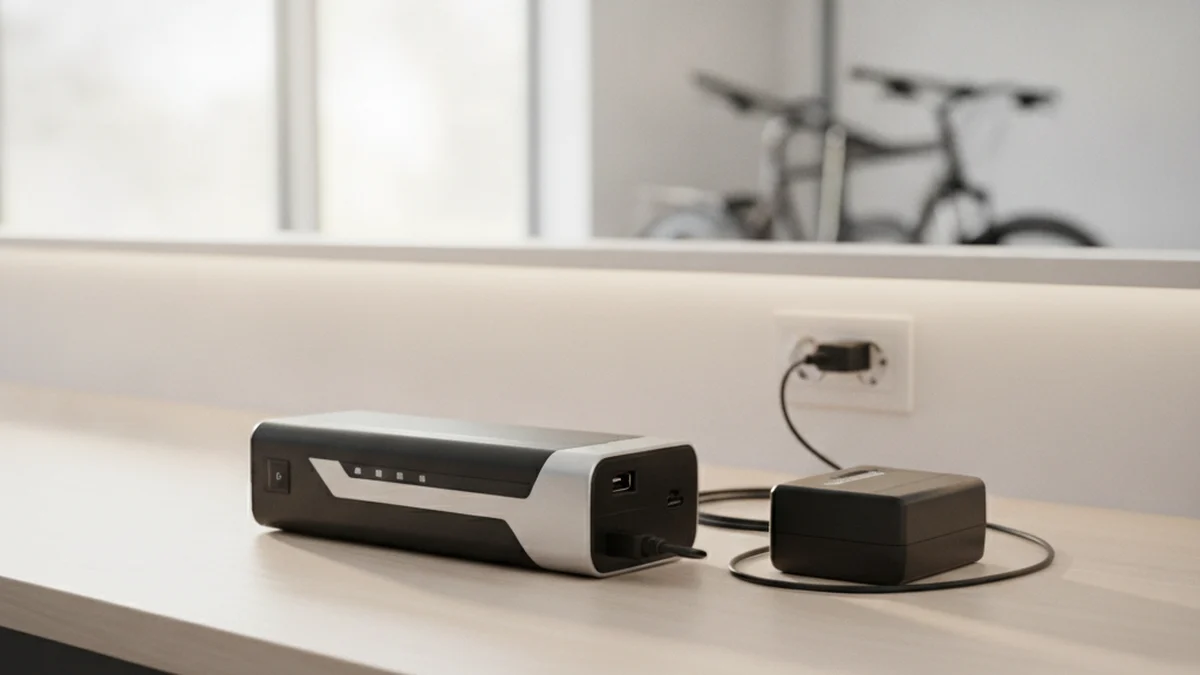
Electric bicycles have become a common sight along Fort Lauderdale’s A1A beach corridor, on Broward County residential streets, and across Florida communities where mild weather makes year-round cycling practical. With that growth has come a hazard many riders do not anticipate: lithium-ion battery fires. Unlike a standard traffic collision, an e-bike battery fire can injure a rider who is standing still—charging the bike in a garage, apartment, or storage unit. When the product itself is defective, Florida product-liability law may give the injured person a distinct path to recovery that does not depend on proving a driver was negligent.
Why Lithium-Ion E-Bike Batteries Catch Fire
Lithium-ion cells store a large amount of energy in a compact package. Under normal conditions that energy is released gradually and safely. Several product-related failures can disrupt that balance and trigger what engineers call thermal runaway—a rapid, self-reinforcing chain reaction in which heat generates more heat, often resulting in fire or explosion:
- Design defects in the battery management system (BMS). The BMS is the circuitry that monitors cell temperature, voltage, and charge state. A poorly designed BMS may allow cells to overcharge, overheat, or short-circuit.
- Manufacturing defects. Contamination, microscopic metal particles, or improperly seated cells introduced during production can create internal short circuits that ignite without warning.
- Counterfeit or incompatible chargers. Replacement chargers that do not match the battery’s voltage and current specifications can push cells beyond safe limits. When a manufacturer or retailer sells or bundles an incompatible charger with the bike, liability may attach to that decision.
- Failure to provide adequate warnings or instructions. Riders who are not warned about charging duration limits, temperature restrictions, or signs of battery damage may unknowingly operate a bike in conditions that accelerate cell degradation.
The fire risk is not limited to riding. Many fires occur while the bike is plugged in—overnight in a bedroom, in a building hallway, or in a garage. Injuries in those settings can be severe: thermal burns, respiratory damage from toxic fumes, and property loss.
Three Theories of Product Liability Under Florida Law
Florida product-liability law recognizes three theories under which an injured person may hold a manufacturer, distributor, or retailer responsible for a defective e-bike battery or charger.
Design defect. A design defect exists when the product’s blueprint is itself unreasonably dangerous—the hazard is present in every unit built to that specification. A battery management system that routinely permits overcharging across an entire product line may qualify.
Manufacturing defect. A manufacturing defect occurs when a specific unit departs from the manufacturer’s own standards. The design may have been sound, but a particular battery was assembled with contaminated cells or inadequate insulation; other units of the same model may be fine.
Failure to warn / inadequate instructions. Even a well-designed product can give rise to liability if the manufacturer or seller fails to warn users about foreseeable risks that are not obvious. E-bike batteries carry hazards—charging in extreme temperatures, using non-OEM chargers, continuing to use a battery that has been physically damaged—that are not intuitive to the average consumer.
Florida law applies the concept of strict liability to defective products: in many situations an injured person does not have to prove the manufacturer was careless. The focus is on whether the product was defective and whether that defect caused the injury. An attorney can evaluate which theories apply to a specific situation. For a broader overview of liability principles in e-bike cases, see the discussion at who is liable in a Florida e-bike accident.
How This Differs from a Traffic Crash Claim
Most people associate e-bike injuries with traffic collisions. Those cases turn on negligence principles, Florida’s e-bike accident framework, and the modified comparative negligence rule under § 768.81, Fla. Stat., which bars recovery when a plaintiff is found more than 50 percent at fault.
A battery-fire product-liability claim is fundamentally different. The responsible parties are upstream: the company that designed the battery, the factory that manufactured it, the importer, the distributor, or the retailer that sold an incompatible charger. There may be no driver or traffic violation involved. An injured rider’s own conduct—knowingly using a visibly damaged battery against explicit warnings, for example—could still be raised as a comparative-fault argument, which is one reason consulting an attorney early matters.
Coverage questions also differ. Personal injury protection (PIP) under § 627.736, Fla. Stat. attaches to motor-vehicle policies, providing up to $10,000 in initial medical benefits subject to a 14-day treatment deadline. Whether PIP reaches injuries sustained while an e-bike is stationary and charging varies by policy. A product-liability claim runs directly against the product seller or manufacturer. The Florida e-bike accident guide addresses the interaction between coverage sources and liability claims in greater depth.
Preserving Evidence After an E-Bike Battery Fire
In product-liability litigation, the battery, charger, and bicycle itself are the primary exhibits. Destruction or significant alteration of those items—even unintentionally—can make a case nearly impossible to prove. Steps to take immediately:
- Do not discard, repair, or return the battery or charger. Even a battery that appears completely destroyed retains components experts can analyze.
- Photograph the scene and all equipment before anything is moved, if safe to do so.
- Preserve the original packaging, manual, warning labels, and purchase records.
- Retain all medical records and photographs of injuries.
- Do not make statements to the manufacturer or retailer before speaking with an attorney; those contacts are recorded.
In Fort Myers apartment complexes and Broward County residential neighborhoods alike, fire investigators and insurance adjusters can arrive within hours. Notifying an attorney quickly allows for independent expert examination before evidence is cleaned up or disposed of.
The Two-Year Deadline Under Florida Law
Under § 95.11, Fla. Stat., most personal-injury claims in Florida must be filed within two years of the date of injury—a deadline shortened from four years by HB 837 (March 2023). Missing it generally bars recovery entirely, regardless of how strong the underlying claim might be.
Two years pass quickly during medical treatment. Product-liability cases require early investigation: identifying the correct defendants, preserving the defective product before it is lost or altered, and retaining expert witnesses to analyze the battery failure. Beginning that process promptly protects the claim.
Why Representation Matters in Product-Liability Cases
Product-liability cases involving e-bike batteries are technically demanding. They require expert analysis of battery chemistry, manufacturing records, and safety standards. Defendants often include foreign manufacturers, U.S. importers, and domestic retailers—each of whom may dispute responsibility. An attorney experienced in Florida product-liability and personal-injury litigation understands how to build the evidentiary record these cases require.
DiStefano Law LLC, founded by Robert DiStefano, Esq., has represented injured Floridians for more than 40 years and recovered more than $100 million on their behalf. The firm is based in Fort Lauderdale and serves clients statewide—including Broward County, Fort Myers, and all areas of Florida—through phone, email, and video, appearing in the appropriate judicial circuit when needed. Robert DiStefano personally handles every case; there is no intake call center.
Frequently asked questions
Can I sue a retailer for selling me a defective e-bike battery charger?
Florida product-liability claims can extend to any party in the distribution chain—including the retailer—not only the original manufacturer. If a charger was incompatible, misrepresented, or lacked adequate warnings, the seller may share responsibility. An attorney can identify which parties are appropriate defendants in a specific case.
What if I was charging my e-bike at home when the fire started—does Florida law still cover me?
Yes. A product-liability claim based on a defective battery or charger does not require that you were riding the bike at the time. Fires during charging—in a garage, bedroom, or storage area—are a recognized hazard of defective lithium-ion products. Florida law addresses injuries caused by defective products regardless of the specific activity the victim was engaged in at the time.
How does Florida’s two-year statute of limitations apply to e-bike battery fire cases?
Under § 95.11, Fla. Stat., most personal-injury claims must be filed within two years of the date of injury. Because product-liability cases require early evidence preservation and expert analysis, consulting an attorney promptly after the injury—rather than waiting on medical progress—is advisable.
Will comparative fault affect my product-liability claim if I was using the battery in an unusual way?
Under § 768.81, Fla. Stat., defendants may argue that the injured person’s own conduct contributed to the injury. A plaintiff found more than 50 percent at fault recovers nothing; below that threshold, the award is reduced proportionally. Manufacturers must anticipate reasonably foreseeable uses, including some consumer error. Whether a particular use falls outside that scope is a fact-specific question an attorney can assess.
If you or a family member has been injured in an e-bike battery fire in Florida, DiStefano Law LLC offers a free, confidential, same-day case review. Call Robert DiStefano directly at (954) 572-8000 or submit your information through the contact page. There is no fee unless we recover for you.