

Slip and fall claims and car accident claims are both personal injury cases under Florida law, but they follow different legal frameworks, evidence standards, and insurance processes. Slip and fall cases are governed by premises liability law, while car accidents fall under Florida’s auto insurance and negligence statutes. Understanding these differences is essential for anyone injured in Broward County or the greater Fort Lauderdale area.
- Slip and fall cases require proving that a property owner knew or should have known about a dangerous condition — a standard that differs from auto accident liability.
- Florida’s modified comparative negligence rule applies to both claim types, but fault is assessed differently depending on the setting.
- Car accident claims typically involve mandatory PIP insurance coverage; slip and fall claims do not.
- Evidence preservation is time-sensitive in both case types but is especially critical in premises liability cases, where conditions can be corrected quickly.
- Florida’s statute of limitations for most personal injury claims is two years from the date of injury.
Two Types of Claims, Two Legal Frameworks
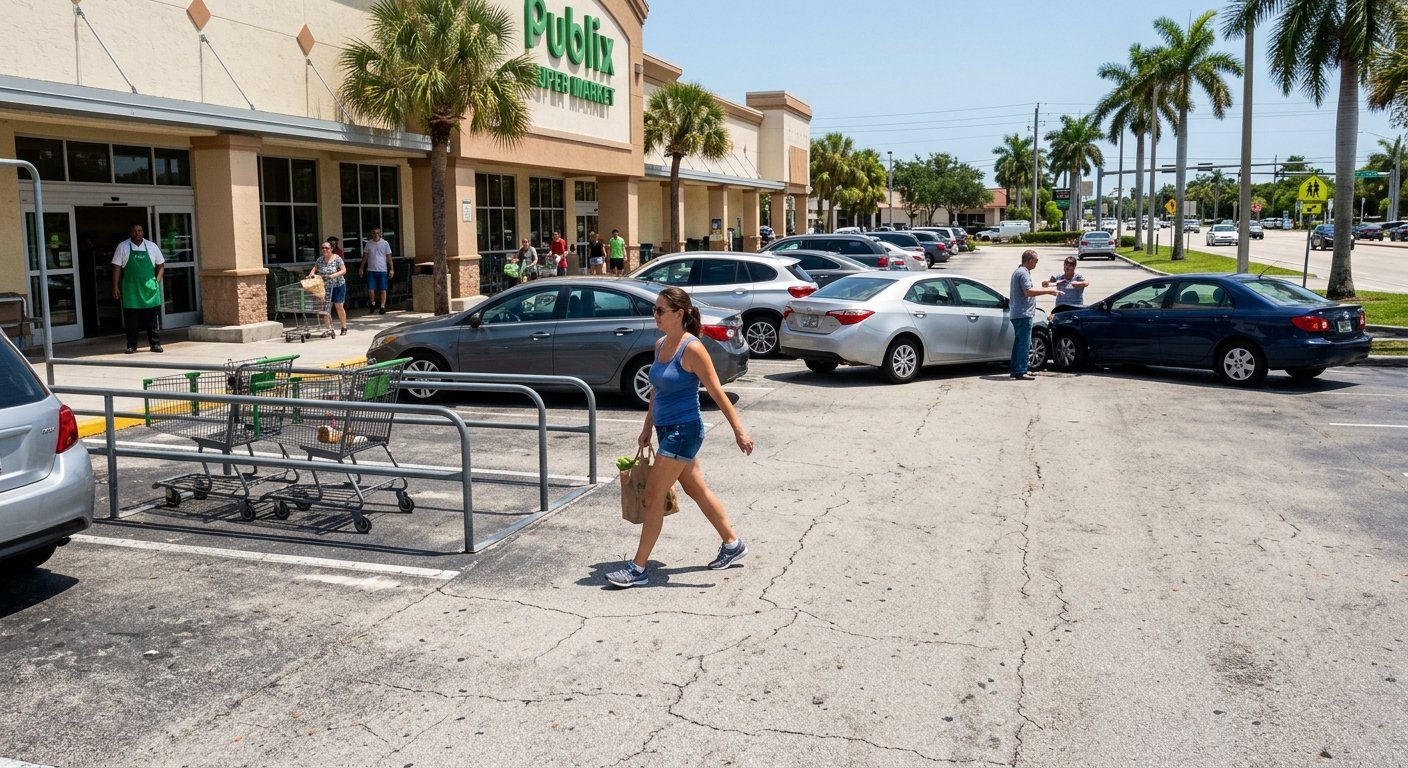
When someone is injured in Florida, the legal path forward depends significantly on where and how the injury occurred. A car accident on I-95 through Fort Lauderdale and a slip and fall at a Pompano Beach grocery store may both result in serious injuries, but they are handled under distinct areas of law.
Car accident claims are rooted in Florida’s motor vehicle statutes and no-fault insurance system. Premises liability claims — which include most slip and fall injuries — are rooted in Florida’s property law and the duty that landowners owe to people who enter their property. Each framework has its own rules about proof, insurance, and timelines.
Florida’s statute of limitations for personal injury claims — including both car accidents and slip and falls — is two years from the date of injury, following the 2023 legislative change. Do not delay in consulting an attorney, as missing this deadline can permanently bar your right to recover compensation.
How Fault Is Established in Each Case Type
Car Accident Liability
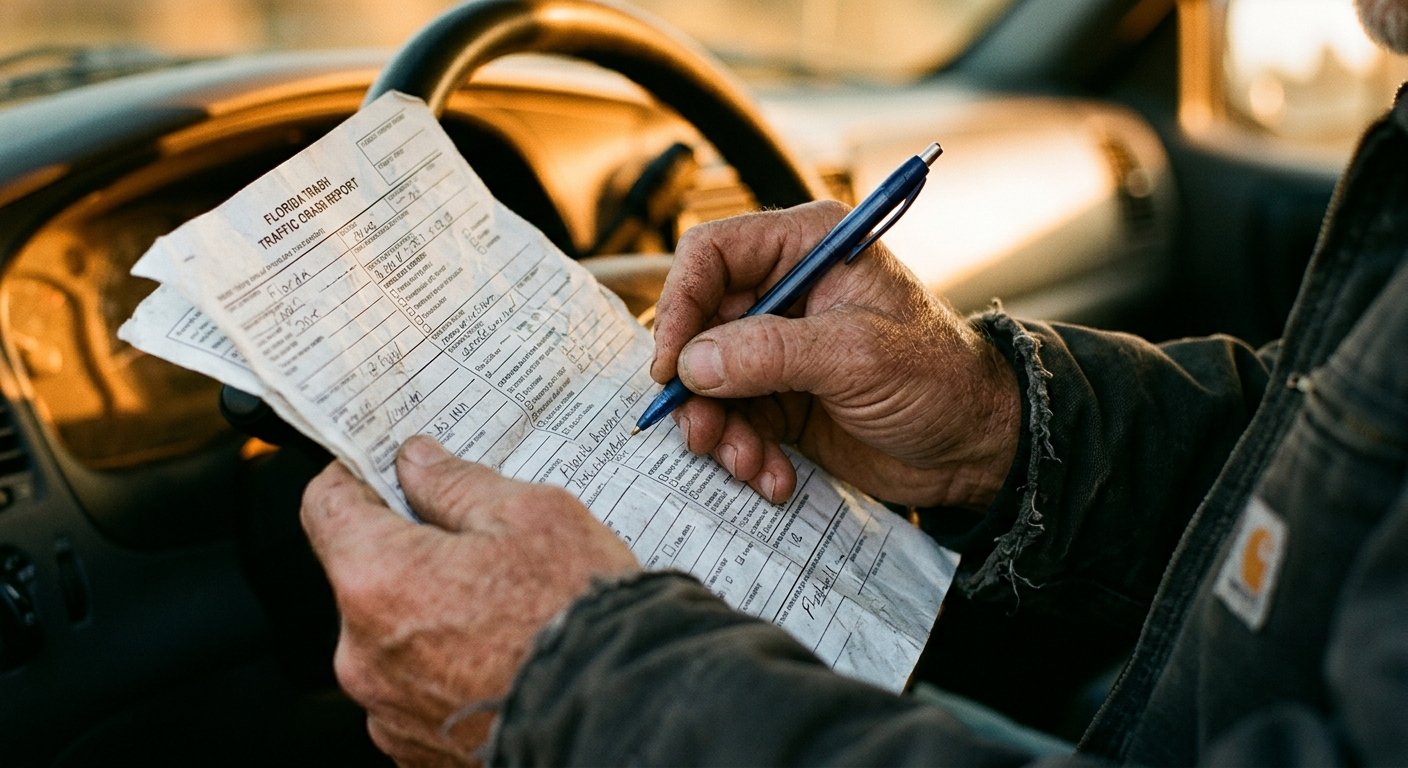
In a Florida car accident claim, liability is typically established through traffic laws, police reports, witness accounts, dashcam footage, and accident reconstruction. Negligence is generally defined as a failure to operate a vehicle with reasonable care — running a red light, following too closely, or driving while distracted. Florida follows a modified comparative negligence standard, meaning that if you are found more than 50 percent at fault for your own accident, you cannot recover damages from another party.
Slip and Fall Liability
Slip and fall claims involve a different legal question: did the property owner know, or should they have known, about the hazard that caused the injury? Under Florida Statute §768.0755, in cases involving transitory foreign substances — such as a spill on a floor — the injured person must prove that the property owner had actual or constructive knowledge of the dangerous condition and failed to remedy it. This is a higher and more specific burden of proof than what is typically required in a car accident claim.
| Factor | Car Accident Claim | Slip and Fall Claim |
|---|---|---|
| Legal Framework | Florida auto statutes, negligence law | Florida premises liability law |
| Primary Insurance | PIP, liability, uninsured motorist | Property owner’s general liability |
| Key Proof Element | Breach of traffic duty or care | Owner’s knowledge of the hazard |
| Evidence Types | Police report, dashcam, crash report | Incident report, surveillance, maintenance logs |
| Statute of Limitations | 2 years (Florida) | 2 years (Florida) |
| Comparative Fault Rule | Modified comparative negligence | Modified comparative negligence |
Florida’s No-Fault Insurance System and Car Accidents
Florida requires all registered vehicle owners to carry Personal Injury Protection (PIP) coverage of at least $10,000. After a car accident, your PIP coverage pays 80 percent of reasonable medical expenses and 60 percent of lost wages, regardless of who caused the crash. This no-fault structure means that for minor injuries, you typically file first with your own insurer rather than the at-fault driver’s.
To pursue a claim against the at-fault driver for pain and suffering or damages beyond PIP limits, Florida law requires that your injury meet a “serious injury” threshold — including significant and permanent loss of an important bodily function, permanent injury, significant scarring, or death. This threshold does not exist in premises liability cases.
Do not assume that your PIP benefits cover everything after a car accident. Policy limits, coordination-of-benefits rules, and the serious injury threshold all affect what you can actually recover. A licensed Florida personal injury attorney can help you evaluate your full range of options.
Evidence Collection: Why It Differs Between Claim Types
At the Scene of a Car Accident
After a car accident, critical evidence includes the police crash report filed by responding officers, photographs of vehicle damage and road conditions, contact information for witnesses, and records from the Florida Department of Highway Safety and Motor Vehicles. This evidence is often preserved through official channels, giving injured parties some time to organize their claim.
At a Slip and Fall Scene
Evidence in a slip and fall case is far more perishable. A wet floor is mopped. A broken step is repaired. Surveillance footage is overwritten. In Broward County premises liability cases, the following steps are essential and time-sensitive:
- Report the incident immediately to store management or property staff and request a written incident report.
- Photograph the hazard, your surroundings, and any visible injuries before conditions change.
- Identify any witnesses and collect their contact information.
- Preserve the shoes and clothing worn at the time of the incident.
- Send a written notice to the property owner or manager requesting that surveillance footage be preserved.
In premises liability cases, the evidence that wins or loses a case can disappear within hours of the incident.
What Damages Are Available in Each Case Type
Both claim types allow injured individuals to seek compensation for medical expenses, lost wages, and pain and suffering. However, the sources of recovery and the path to obtaining that compensation differ.
In a car accident claim, you may recover from your own PIP insurer, the at-fault driver’s bodily injury liability coverage, your own uninsured or underinsured motorist policy, and potentially third parties such as vehicle manufacturers or government entities responsible for road conditions. The Florida Department of Highway Safety and Motor Vehicles maintains crash data that can support your claim.
In a slip and fall claim, recovery typically comes from the property owner’s general liability insurer. Commercial properties, retail stores, restaurants, and apartment complexes in Hollywood, Coral Springs, and Davie are generally required to carry such coverage. If a government-owned property is involved — such as a public sidewalk or municipal building — different notice requirements apply under Florida’s sovereign immunity statutes.
Seek Medical Attention
Get evaluated by a physician promptly after any injury. Your medical records form the foundation of your claim, regardless of whether the incident was a car accident or a slip and fall.
Document the Scene
Photograph everything relevant — vehicle damage, road conditions, hazardous surfaces, warning signs (or their absence), and your injuries.
Report the Incident
For car accidents, ensure a police report is filed. For slip and falls, file a written incident report with the property owner or manager on the same day.
Preserve All Evidence
Retain clothing, footwear, receipts, and any communications with insurers or property owners. Request that surveillance footage be preserved in writing immediately.
Consult a Personal Injury Attorney
Both claim types benefit significantly from early legal counsel. An attorney can identify liable parties, manage insurer communications, and protect your legal rights before the statute of limitations expires.
Working With an Attorney on Each Claim Type
Both car accident and premises liability cases can involve disputed liability, aggressive insurance adjusters, and complex negotiations. Florida’s modified comparative negligence rule means that adjusters in both claim types may attempt to assign you a share of fault to reduce or eliminate your recovery. Having a licensed Florida personal injury attorney manage communications and build your case from the outset protects you from common pitfalls.
According to research cited by the Insurance Information Institute, represented claimants consistently achieve higher net settlements than unrepresented individuals, even after accounting for attorney fees. The value of experienced legal counsel is particularly evident in premises liability cases, where the burden of proof is higher and evidence is more vulnerable to loss.
DiStefano Law has served injured clients across Broward County — in Fort Lauderdale, Hollywood, Deerfield Beach, Coral Springs, and surrounding communities — handling both motor vehicle accident claims and premises liability matters. Our South Florida legal team understands the local courts, the common insurance tactics employed in this region, and the specific legal standards that apply to each claim type. Spanish-language assistance is available for clients who prefer to communicate in Spanish.
Frequently Asked Questions
Can I file both a car accident claim and a slip and fall claim if both happened in the same incident?
It is possible to have overlapping claims if a car accident occurred on private property and involved a hazardous condition, or if separate incidents both caused injury. Each claim is evaluated independently under its applicable legal standard. An attorney can assess which claims apply to your specific situation and how to pursue them properly.
How long do I have to file a slip and fall claim in Florida?
Florida’s statute of limitations for premises liability claims, including slip and falls, is two years from the date of the injury. This deadline applies to most personal injury claims in Florida following the 2023 legislative change. Do not wait to consult an attorney, as certain circumstances — such as claims against a government entity — may require even earlier written notice.
What if the property owner says there was a warning sign near the hazard?
The presence of a warning sign does not automatically eliminate a property owner’s liability. Courts consider whether the sign was adequate, visible, and placed in a location that gave reasonable notice of the danger. An attorney can assess whether the warning provided was legally sufficient under Florida premises liability standards.
Does Florida’s no-fault insurance rule apply to slip and fall cases?
No. Florida’s Personal Injury Protection (PIP) no-fault system applies only to motor vehicle accidents. Slip and fall and other premises liability claims are not covered by PIP. Recovery in those cases typically comes from the property owner’s general liability insurance policy.
What if I was partially at fault for my slip and fall or car accident?
Under Florida’s modified comparative negligence rule, you may still recover damages if you were less than 51 percent at fault. Your total compensation is reduced by your percentage of fault. For example, if you were found 20 percent responsible, you would recover 80 percent of your total damages. If you are found 51 percent or more at fault, you cannot recover from the other party.
Injured in Broward County? Speak With a Florida Personal Injury Attorney
Whether your injury occurred in a car accident or on someone else’s property, DiStefano Law offers a free consultation with no fee unless you recover — so there is no financial risk to getting experienced legal guidance today.

Robert DiStefano, Esq.
For more than 40 years, Robert DiStefano has represented South Florida accident victims in claims against insurance carriers. From his Fort Lauderdale office, he has personally handled motor vehicle, premises liability, medical malpractice, catastrophic injury, aviation, and wrongful death cases — recovering more than $100 million for the people he represents. More about Robert →