

When Medical Care Goes Wrong: Understanding Your Legal Options
If you are looking for a medical malpractice lawyer, you are likely facing a difficult situation. When a healthcare provider’s negligence causes harm, the consequences can be serious, from worsening health to permanent disability and significant medical bills. You need answers and a path forward.
A quick guide to choosing a medical malpractice lawyer:
- Look for relevant experience: Seek attorneys who handle medical malpractice matters.
- Ask about their background: Consider the attorney’s experience with cases like yours.
- Confirm a free consultation: Many firms offer a no-cost initial case review.
- Understand fees: Many firms work on contingency (a percentage of the recovery), so you pay no upfront fees.
- Act promptly: Florida’s statute of limitations for medical malpractice is strict, generally giving you two years from discovering the injury to file a claim, subject to certain outside limits.
Medical malpractice is not simply a bad outcome; it is a preventable error caused by a provider deviating from the accepted standard of care. Proving it requires legal guidance to navigate complex medical issues and respond to well-funded insurance companies.
DiStefano Law LLC has served the Fort Lauderdale and South Florida communities for more than 40 years. Founding attorney Robert DiStefano handles personal-injury matters personally. The firm understands the medical and legal complexities involved and is here to guide you with care and experience.
Understanding Medical Malpractice: More Than Just a Bad Outcome

Not every bad medical outcome is malpractice. The key question is whether the care you received met the professional standard. Medical malpractice occurs when a healthcare provider’s negligence—a failure to provide the level of care that a reasonably competent professional would have—directly causes you harm. In Florida, proving a bad outcome alone is not enough; you must prove this failure caused your injury.
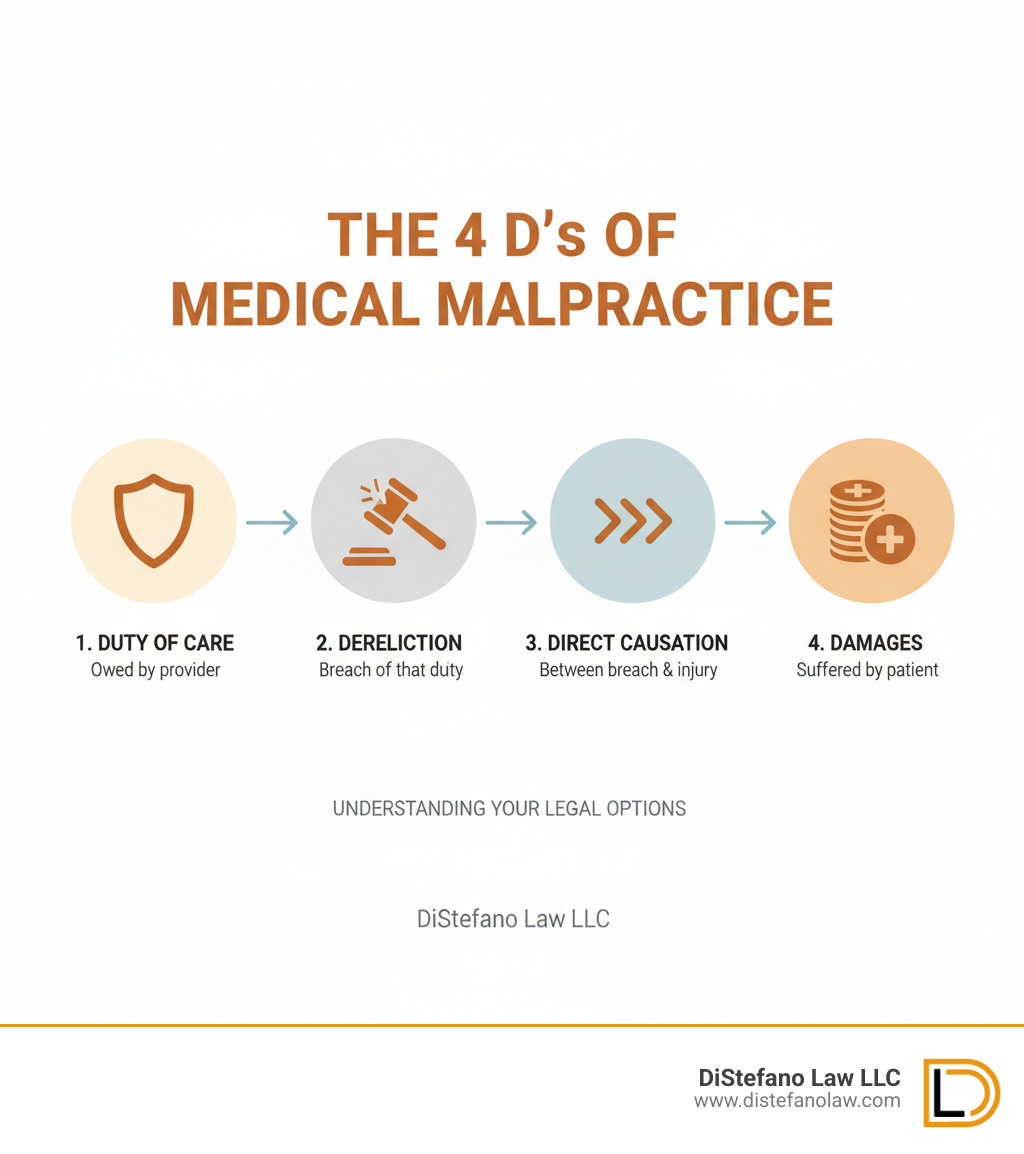
The Four Elements of Negligence
To build a successful case, we must prove four essential elements:
- Duty of Care: A provider-patient relationship establishes a professional duty to treat you according to accepted medical standards.
- Breach of Standard of Care: The provider failed to meet that standard through their action or inaction. This often requires expert testimony to establish.
- Causation: The provider’s breach of duty directly caused your injury. We must show your condition worsened specifically because of the negligent care.
- Damages: You suffered real, measurable harm, such as additional medical bills, lost income, or pain and suffering.
| Feature | Medical Malpractice | Unfortunate Medical Outcome |
|---|---|---|
| Definition | Harm caused by a healthcare provider’s negligence, falling below accepted standards. | An unexpected or negative result that occurred despite appropriate medical care. |
| Cause | Directly linked to a healthcare provider’s error, omission, or deviation from standards. | Inherent risks of treatment, progression of disease, or unforeseen complications not due to negligence. |
| Legal Basis | Involves a breach of duty, causation, and damages; actionable in court. | Generally not actionable; no negligence involved. |
| Preventability | Often preventable if proper standards of care were followed. | May be unavoidable, even with the best medical practice. |
| Example | Surgeon operates on the wrong limb. | Patient develops an infection despite sterile surgical conditions. |
Common Examples
- Misdiagnosis or Delayed Diagnosis: A failure to identify a condition in a timely manner, leading to missed treatment opportunities and worsened outcomes.
- Surgical Errors: Preventable mistakes like operating on the wrong body part, leaving instruments inside a patient, or damaging nearby organs.
- Birth Injuries: Negligence during labor and delivery causing conditions like cerebral palsy or nerve damage due to errors like a delayed C-section or improper use of tools.
- Anesthesia Errors: Giving too much or too little anesthesia, or failing to monitor a patient properly, which can lead to brain damage or death.
- Medication Mistakes: Prescribing or dispensing the wrong drug or dosage, or failing to check for dangerous interactions.
- Hospital-Acquired Infections: Serious infections like MRSA or sepsis caused by a facility’s failure to follow sanitation and infection control protocols.
For more information, visit our page on malpractice cases.
Who Can Be Held Liable
Liability in a medical malpractice case can extend beyond a single doctor. Any licensed provider, including physicians, surgeons, nurses, and chiropractors, can be held responsible. Furthermore, hospitals and healthcare facilities like urgent care centers, clinics, and nursing homes can be liable for their employees’ negligence (vicarious liability) or for their own failures, such as negligent hiring, understaffing, or faulty equipment.
Common Signs of Medical Negligence
- Your condition worsens unexpectedly after treatment.
- The explanation for an injury is vague, contradictory, or doesn’t make sense.
- A provider admits a mistake was made.
- You were not informed of significant risks before a procedure (lack of informed consent).
- A diagnosis doesn’t fit your clear symptoms.
Where Medical Errors Commonly Occur
Medical errors can arise in a range of settings. Some of the more common areas include:
- Treatment-related errors
- Diagnosis-related errors
- Surgery-related errors
- Obstetrics-related errors
- Medication-related errors
These categories illustrate the many ways negligence can occur and why experienced legal help is important.
First Steps to Take if You Suspect Malpractice

If you suspect something went wrong with your medical care, taking immediate, decisive action is crucial to protect your health and your legal rights.
Immediate Actions
Your health is the top priority. Follow these steps:
- Seek a second medical opinion: Have an independent doctor evaluate your condition. This can help correct any ongoing medical issues and provide an objective view of your previous care.
- Obtain all your medical records: You have a legal right to your complete file, including doctor’s notes, test results, and hospital charts. These documents are the foundation of any potential case.
- Document everything: Keep a detailed journal of your symptoms, recovery, and how the injury impacts your daily life. Also, track all related expenses, such as medical bills, lost wages, and travel costs for appointments.
The Critical Importance of Florida’s Time Limits
Florida law imposes strict, non-negotiable deadlines for filing medical malpractice lawsuits. Missing them means losing your right to compensation forever.
- The Statute of Limitations: Generally, you have two years from the date you discovered—or should have discovered—the injury caused by malpractice to file a lawsuit. The clock starts when you reasonably know that an error occurred and caused you harm. Note that this medical malpractice deadline is distinct from the deadlines that apply to wrongful death and to most other personal-injury claims.
- The Statute of Repose: Florida also has a four-year outside deadline from the date the malpractice actually occurred. This applies even if you did not discover the injury right away. Limited exceptions for fraud or concealment can extend this to seven years, but they are rare.
It is important to act promptly. Building a medical malpractice case is complex and time-consuming. It requires in-depth investigation and consultation with medical experts. Delay can lead to lost evidence and faded memories. Contacting an experienced medical malpractice lawyer as soon as you suspect an issue helps keep your legal options open. For more information, learn from a Fort Lauderdale Medical Negligence Attorney.
Finding a Qualified Medical Malpractice Lawyer
Choosing the right legal representation is an important decision. As you research your options, focus on finding an attorney with relevant experience in medical malpractice matters.
How to Find an Attorney
Start by researching law firms in Fort Lauderdale and South Florida that handle medical malpractice matters. This is a complex field, and it helps to work with an attorney experienced in it. Next, check the attorney’s credentials and experience. You can verify an attorney’s license and disciplinary history through resources like The Florida Bar’s member directory. Personal referrals from trusted sources can also provide valuable insight.
Key Factors When Choosing Your Lawyer
- Experience and Focus: Does the attorney have a history of handling cases similar to yours? Familiarity with the specific medical issues is an advantage.
- Relevant Case History: Ask about the attorney’s experience handling verdicts and settlements in medical malpractice matters, and their approach to cases involving hospitals and insurance companies.
- Trial Experience: Insurance companies are aware of which lawyers are willing to go to trial. Working with a firm that has courtroom experience can influence settlement discussions.
- Client Feedback: Reviews can offer insight into an attorney’s communication style, responsiveness, and dedication to clients.
- Access to Medical Experts: A strong case depends on credible expert testimony. Your lawyer should have access to qualified medical specialists to review your case and testify on your behalf.
Understanding Legal Fees: The Contingency Fee Agreement
Concerns about cost should not prevent you from seeking justice. Many medical malpractice lawyers work on a contingency fee basis. This means:
- You pay no upfront fees. We do not charge retainers or hourly rates.
- We only get paid if we win. Our fee is a percentage of the compensation we secure for you, typically 30-40%. If there is no recovery, you owe no attorney fees.
This model helps make legal representation accessible. Litigation costs, such as expert witness fees, are handled separately and will be clearly explained in your agreement. Request a Free Consultation to learn more.
How the Right Medical Malpractice Lawyer Can Help
An experienced attorney acts as your advocate, handling the aspects of your case. The firm conducts a thorough investigation, navigates the intricate legal and medical issues, and responds to insurance companies on your behalf. The goal is to document all of your past and future damages and pursue the compensation available to you under the law.
The Complex Journey of a Medical Malpractice Claim

Medical malpractice claims follow a complex, multi-stage path that requires patience and expert legal guidance. Understanding the process can help you feel more prepared for the road ahead.
The Typical Claim Process
- Initial Investigation: We gather all medical records and consult with medical experts to determine if the standard of care was breached and if you have a valid case.
- Hiring Expert Witnesses: We retain qualified medical professionals to provide credible testimony explaining how the negligence occurred and caused your injuries.
- Filing the Lawsuit: After completing Florida’s pre-suit requirements, we file a formal complaint in court, officially starting your legal action.
- The Discovery Phase: Both sides exchange information through depositions (sworn testimony), written questions, and document requests to build their cases.
- Settlement Negotiations or Mediation: Many cases are resolved at this stage. We negotiate to pursue a fair settlement that compensates you without the need for a trial.
- Trial: If a fair settlement cannot be reached, we are fully prepared to present your case to a jury and fight for the justice you deserve.
Potential Compensation in a Successful Case
Compensation, or damages, is intended to cover all your losses. It is divided into two main categories:
- Economic Damages: These are your tangible financial losses, including all past and future medical bills, lost wages, diminished earning capacity, and rehabilitation costs.
- Non-Economic Damages: This compensates you for the intangible, human impact of the injury, such as pain and suffering, emotional distress, anxiety, and loss of enjoyment of life.
Our Florida Injury Law Firm can help you identify all potential damages in your case.
Challenges to Expect
Pursuing a claim is not easy. Be prepared for:
- Case Complexity and Length: These cases are intricate and can take years to resolve due to the medical and legal details involved.
- Aggressive Defense Tactics: Insurers have teams of lawyers dedicated to minimizing or denying your claim. They will challenge every aspect of your case.
- High Costs of Litigation: Expert witness fees and other expenses can be substantial. Our contingency fee model means we advance these costs, and you only pay if we win.
- Emotional Toll: Reliving the trauma during depositions and court proceedings can be difficult. We provide compassionate support to guide you through this challenging process.
Frequently Asked Questions about Medical Malpractice Claims
When facing the aftermath of medical negligence, you deserve clear, direct answers. Here are some of the most common questions we receive.
How much does it cost to hire a medical malpractice lawyer?
You pay nothing upfront. Many medical malpractice lawyers, including DiStefano Law LLC, work on a contingency fee basis. This means the firm collects a fee—a pre-agreed percentage of your recovery—only if it successfully secures compensation for you. If the firm does not recover on your case, you owe no attorney fees.
How long do I have to file a medical malpractice lawsuit in Florida?
Time is critical. Florida’s statute of limitations generally gives you two years from the date you knew (or should have known) that medical negligence caused your injury. There is also a strict four-year absolute deadline from the date the incident occurred, with very few exceptions. Because these cases take time to investigate, you must act quickly to protect your rights. Learn from a Fort Lauderdale Medical Negligence Attorney how to meet these deadlines.
What is my medical malpractice case worth?
Every case is unique, so there is no average value. The worth of your case depends on the full extent of your damages. This includes calculable economic damages (medical bills, lost income) and non-economic damages (pain and suffering, emotional distress, loss of enjoyment of life). The severity and permanence of your injury are key factors. During a free consultation, we can evaluate the specifics of your situation to give you a better understanding of your potential compensation. Contact us to discuss your medical malpractice case today.
Conclusion: Get the Experienced Representation You Deserve
When medical care goes wrong, the consequences are devastating. Medical malpractice represents a profound breach of trust, leaving you with physical, emotional, and financial burdens. The path to justice is complex, involving intricate medical knowledge and aggressive opposition from insurance companies.
You do not have to face this alone. Choosing the right medical malpractice lawyer is an important step. DiStefano Law LLC has served families in Fort Lauderdale and South Florida for more than 40 years, combining legal experience with genuine compassion and handling the complex legal work so you can focus on healing.
Timing matters. Because Florida’s statute of limitations for medical malpractice is strict, it is important to act promptly. Waiting could mean losing your right to compensation.
The firm offers free consultations and works on a contingency fee basis, so you pay nothing unless it recovers on your case.
Contact us to discuss your medical malpractice case today.