

Navigating the Aftermath of a Medical Error: Your First Steps
When you have been harmed by a healthcare provider’s negligence, choosing an experienced Fort Lauderdale malpractice lawyer is an important step toward pursuing the compensation available to you under Florida law. Medical errors can affect your health, finances, and future, and you do not have to face the legal process alone.
If you are considering a Fort Lauderdale malpractice lawyer, here is what you need to know:
- Statute of Limitations: In Florida, medical malpractice claims are generally subject to a two-year deadline from the date you discovered the injury, with an outside limit (statute of repose) of four years from the date of the negligence. Note that this deadline differs from the general two-year deadline that applies to most other personal-injury claims.
- What to Look For: Consider a lawyer with medical malpractice experience and a contingency fee structure (no fee unless the firm recovers).
- Common Cases: Misdiagnosis, surgical errors, medication mistakes, birth injuries, and delayed treatment.
Medical malpractice occurs when a healthcare provider fails to meet the accepted standard of care, resulting in patient harm. This can happen during routine procedures, in emergency rooms, or even through something as simple as a prescription error. The consequences can be life-altering—from permanent disability to wrongful death—and the legal process to prove negligence is complex.
Medical malpractice cases are difficult to pursue without experienced representation. Healthcare providers and their insurance companies typically retain experienced legal teams early in the process to contest claims and limit their exposure.
DiStefano Law LLC has served Fort Lauderdale and Broward County for more than 40 years. Founding attorney Robert DiStefano handles personal-injury matters personally, applying medical malpractice experience and a client-centered approach to each case.
Related topics you may find helpful:
- Fort Lauderdale wrongful death claims
- Medical malpractice claims in Florida
What Constitutes Medical Malpractice in Fort Lauderdale?
Medical malpractice, at its core, occurs when a healthcare professional acts negligently, ignorantly, or provides substandard care, leading to patient harm. When we visit a doctor or a healthcare facility, we place an immense amount of trust in their expertise and commitment to our well-being. When that trust is betrayed by a professional’s failure to adhere to the accepted “standard of care,” it can lead to devastating consequences.
The “standard of care” is a crucial legal concept. It refers to the level and type of care that a reasonably prudent and competent healthcare provider, with similar training and experience, would have provided under the same or similar circumstances. It’s not about achieving a perfect outcome every time, but about acting with reasonable skill and care.
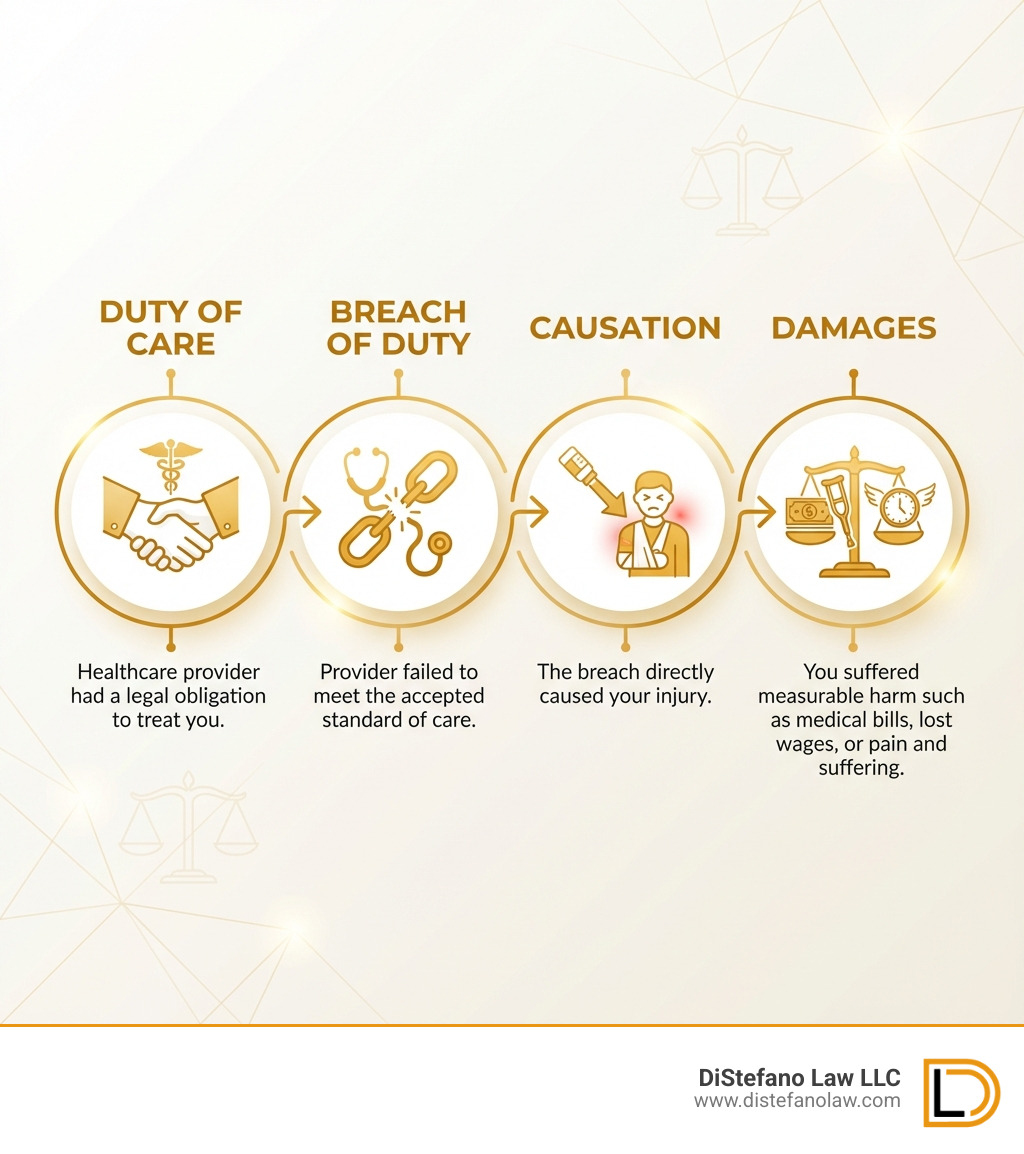
To establish medical malpractice in Fort Lauderdale, we must prove four key elements:
- Duty of Care: The healthcare provider (doctor, nurse, hospital, etc.) had a professional obligation to provide care to you. This is usually established by a doctor-patient relationship.
- Breach of Duty: The provider failed to meet the accepted standard of care. This means their actions (or inactions) fell below what a competent professional would have done in that situation.
- Causation: The breach of duty directly caused your injury or worsened your condition. This is a critical link; it’s not enough to show a mistake was made if that mistake didn’t directly lead to your harm.
- Demonstrable Harm/Damages: You suffered actual, measurable harm as a result of the negligence. This harm can be physical, emotional, or financial.
The consequences of medical malpractice are often severe and life-altering. They can range from prolonged suffering and permanent disability to wrongful death. Families who have lost loved ones due to negligence will never have them back, and individuals who suffer permanent injuries may never fully regain their health. However, pursuing a claim with a dedicated Florida Personal Injury Attorney can provide vital financial compensation for the extensive medical bills, lost income, and immense pain and suffering, while also holding negligent parties accountable and potentially preventing similar harm to others.
What Are the Most Common Types of Medical Malpractice?
Medical errors can occur in numerous ways, each with potentially severe consequences for patients. As experienced Fort Lauderdale malpractice lawyers, we often see cases arising from several common types of medical negligence:
- Misdiagnosis or Delayed Diagnosis: This occurs when a healthcare provider fails to correctly identify a patient’s condition or delays doing so. A misdiagnosis can lead to inappropriate treatment, while a delayed diagnosis can allow a treatable condition, like cancer or a heart problem, to progress to a more advanced, untreatable, or life-threatening stage.
- Surgical Errors: These are mistakes made during a surgical procedure. Examples include operating on the wrong body part, leaving surgical instruments inside a patient, causing nerve damage, or performing unnecessary procedures. Botched surgeries can lead to severe complications, additional surgeries, and long-term disability.
- Anesthesia Mistakes: Errors related to anesthesia can have catastrophic effects. This includes administering too much or too little anesthetic, failing to monitor a patient’s vital signs during surgery, or having an adverse reaction due to a lack of proper patient assessment.
- Birth Injuries: Tragically, errors made during labor and delivery can cause lasting harm to newborns, sometimes leading to conditions such as Cerebral Palsy, Hypoxic Ischemic Encephalopathy (HIE), or Erb’s Palsy. These injuries can occur before, during, or immediately after delivery and often require lifelong specialized care.
- Medication Errors: These errors can happen at any stage, from a doctor prescribing the wrong drug or dosage to a pharmacist dispensing the incorrect medication, or a nurse administering it improperly.
- Hospital-Acquired Infections: While some infections are unavoidable, others result from a hospital’s failure to maintain sterile conditions, follow proper hygiene protocols, or promptly diagnose and treat infections.
- Plastic Surgery Mistakes: Cosmetic and plastic surgery procedures, though elective, still fall under the umbrella of medical care. Negligence during these procedures can lead to disfigurement, complications, and significant emotional distress.
- Radiology Errors: Misinterpreting X-rays, MRIs, CT scans, or other diagnostic images can lead to misdiagnosis or delayed diagnosis, preventing timely and effective treatment.
- Emergency Room Errors: The fast-paced, high-stress environment of an ER can sometimes lead to mistakes such as delayed treatment for critical conditions, misdiagnosis under pressure, or improper patient stabilization.
These are just some of the many ways medical malpractice can occur. Each case is unique, but they all share a common thread: a healthcare provider’s negligence caused preventable harm.
Understanding Your Rights: Damages and Deadlines in Florida

When you or a loved one has suffered due to medical negligence, understanding your legal rights is paramount. Florida law provides avenues for victims to seek justice and financial recovery, but it also imposes strict deadlines and specific rules. As your dedicated Fort Lauderdale Florida Personal Injury Lawyers, we are here to guide you through this complex landscape, ensuring your rights are protected every step of the way.
What Damages Can Be Recovered in a Lawsuit?
In a successful medical malpractice lawsuit, the goal is to recover compensation that addresses the full extent of the harm you’ve suffered. This compensation, often referred to as “damages,” typically falls into two main categories: economic and non-economic.
Economic Damages are tangible, quantifiable financial losses directly resulting from the medical negligence. These can include:
- Medical Bills: Past and future costs of medical treatment, hospitalization, rehabilitation, medications, and any specialized care necessitated by the injury.
- Lost Wages: Income you’ve lost because you were unable to work due to your injury.
- Future Earning Capacity: Compensation for the income you would have earned in the future if not for the injury, especially if the malpractice resulted in permanent disability or a reduced ability to work.
- Other Out-of-Pocket Expenses: Such as assistive devices, home modifications, or transportation costs for medical appointments.
Non-Economic Damages are more subjective and compensate for intangible losses that don’t have a direct monetary value but significantly impact your quality of life. These can include:
- Pain and Suffering: Physical pain and discomfort caused by the injury.
- Emotional Distress: Psychological impacts such as anxiety, depression, fear, anger, and trauma.
- Disfigurement and Disability: Compensation for permanent physical changes or loss of bodily function.
- Loss of Consortium: In cases of severe injury or wrongful death, this compensates a spouse or family members for the loss of companionship, affection, and support.
Florida law has at times imposed caps on non-economic damages in medical malpractice cases, and Florida courts have found certain of those caps unconstitutional. The law in this area has changed over time. Generally, there are no caps on economic damages. Because the rules governing non-economic damages continue to evolve, your attorney can explain how the law applies to your claim at the time it is filed.
Every case is different, and the value of any claim depends on its specific facts. The firm works to document the full extent of your losses and pursue the compensation available to you under the law.
What Is the Statute of Limitations for a Fort Lauderdale Malpractice Lawyer to File?
One of the most critical aspects of a medical malpractice claim in Florida is understanding the statute of limitations—the strict legal deadline within which you must file your lawsuit. Missing this deadline almost certainly means losing your right to seek compensation forever.
In Florida, the general statute of limitations for medical malpractice claims is two years. This two-year period typically begins from the date the medical malpractice occurred or, importantly, from the date you discovered the injury or reasonably should have discovered the injury. This latter concept is known as the “discovery rule.” This deadline is distinct from the general two-year deadline that applies to most other personal-injury claims and the different deadlines that apply to wrongful death claims.
There is also a “statute of repose,” which sets an outside deadline regardless of when the injury was discovered. In Florida, this is generally four years from the date the medical negligence occurred. This means that even if you discover an injury three years after the malpractice, you must still file within that four-year window from the initial incident.
There are a few exceptions to these rules:
- Fraudulent Concealment: If the healthcare provider intentionally concealed the medical error, the statute of limitations can be extended, typically to two years from the date the fraud was discovered, but with an overall limit of seven years from the date of the malpractice.
- Cases Involving Children: For minors, the statute of limitations may be extended, often allowing a claim to be brought before the child’s eighth birthday, even if it falls outside the standard four-year repose period.
Beyond these deadlines, Florida law also requires a 90-day pre-lawsuit investigation period. Before filing a lawsuit, you must notify the healthcare provider of your intent to sue and provide an affidavit from a medical expert confirming that malpractice occurred. This 90-day period allows for a potential settlement discussion before a formal lawsuit is filed.
Given these complex and unforgiving deadlines, the importance of acting quickly cannot be overstated. If you suspect you’ve been a victim of medical malpractice, contact a Fort Lauderdale malpractice lawyer as soon as possible. We can help you steer these timelines, ensure all pre-suit requirements are met, and protect your right to pursue justice.
How a Fort Lauderdale Malpractice Lawyer Can Help Your Case

Facing a medical malpractice claim can feel overwhelming. You are likely dealing with physical pain, emotional distress, and financial strain, all while trying to understand a complex legal system. An experienced Fort Lauderdale malpractice lawyer can help bring clarity to the process and work to protect your rights. At DiStefano Law LLC, we handle the details of your claim and build your case carefully from the ground up.
What Is the Process of Filing a Medical Malpractice Lawsuit?
Filing a medical malpractice lawsuit in Fort Lauderdale is a multi-step process that demands precision, expertise, and dedication. Here’s a general overview of how we guide our clients through each stage:
- Initial Consultation: Your journey begins with a free, no-obligation consultation. We listen to your story, assess the details of your potential claim, and answer your initial questions. This is our chance to understand what happened and determine if you have a viable case.
- Case Investigation and Evidence Gathering: If we believe you have a strong claim, we launch a thorough investigation. This involves gathering all relevant medical records, doctor’s notes, hospital charts, test results, and any other documentation related to your treatment and injury. We also collect evidence such as police reports, videos, photos, emails, and phone call recordings if pertinent to your case.
- Hiring Medical Experts: Medical malpractice cases are highly technical. We work with a network of qualified medical experts in the same specialty as the negligent provider. These experts review your medical records and provide an affidavit, a sworn statement, confirming that medical malpractice occurred and that it caused your injury. This expert testimony is often crucial for proving negligence in court.
- Florida’s Pre-Suit Notice Requirements: Before a lawsuit can be formally filed, Florida law mandates a “pre-suit” process. This involves:
- Serving a “Notice of Intent to Sue” on all healthcare providers and institutions we intend to sue. This notice outlines the alleged negligence.
- Attaching the medical expert’s affidavit to this notice.
- A 90-day waiting period then ensues, during which the defendant healthcare provider can conduct their own investigation and potentially offer a settlement. This period is intended to encourage early resolution.
- Filing the Lawsuit: If a satisfactory settlement isn’t reached during the pre-suit period, we proceed to file a formal complaint (lawsuit) with the appropriate court in Broward County.
- Discovery Phase: This is often the longest phase of litigation, potentially lasting a year or more. Both sides exchange information, conduct depositions (out-of-court sworn testimonies), request documents, and engage in interrogatories (written questions). This process allows us to uncover the facts relevant to your case.
- Negotiation and Settlement: Throughout the discovery phase, and often after, settlement negotiations continue. Many medical malpractice claims settle out of court, avoiding the need for a trial. We negotiate on your behalf and work to secure a fair resolution.
- Trial: If a fair settlement cannot be reached, we are prepared to take your case to trial. We present your case to a jury, calling on medical experts and other witnesses, and advocating for your rights.
We handle all these intricate steps, allowing you to focus on your recovery.
How Does an Attorney Prove Negligence?
Proving medical negligence is the cornerstone of any successful medical malpractice claim. It requires a deep understanding of both legal principles and medical standards. As your Fort Lauderdale medical negligence attorney, we carefully build your case by focusing on the four elements of negligence:
- Establishing Duty of Care: First, we must clearly demonstrate that the healthcare provider owed you a professional duty of care. This is typically straightforward, established by the existence of a doctor-patient relationship.
- Proving Breach of Standard of Care: This is often the most challenging aspect. We gather and analyze all medical records, consult with our medical experts, and compare the actions of the healthcare provider to the accepted standard of care for their specialty under similar circumstances. Our experts will testify that the provider’s actions fell below this standard. For instance, if a surgeon made an error during a procedure, our expert surgeon would explain how a reasonably competent surgeon would have acted differently.
- Linking the Breach Directly to the Injury (Causation): It’s not enough to show that a mistake was made; we must prove that this specific mistake directly caused or significantly contributed to your injury. We work with medical experts to draw a clear line between the negligent act and the resulting harm, demonstrating that your injury would not have occurred but for the provider’s negligence.
- Documenting All Damages: Finally, we must carefully document all the harm you’ve suffered—both economic and non-economic. This involves gathering all your medical bills, proof of lost wages, and potentially working with economists to project future financial losses. We also help you articulate the profound impact the injury has had on your daily life, your emotional well-being, and your overall quality of life.
The firm has more than 40 years of experience, giving us insight into how defense attorneys and insurance companies operate. This allows us to anticipate their strategies and build a well-supported case for you.
Choosing a Legal Partner in Fort Lauderdale
When you are navigating the aftermath of medical malpractice, selecting the right legal representation is an important decision. The outcome of your case can affect your future, making it worthwhile to choose a legal partner who is both experienced and committed to your well-being. At DiStefano Law LLC, we understand the local legal landscape, including the Broward County Courthouse. We believe in transparency and in keeping clients informed, and we encourage you to consult resources such as the Broward County Bar Association to learn more about the legal community.
What Qualities Should I Look for in a Fort Lauderdale Malpractice Lawyer?
Choosing a Fort Lauderdale malpractice lawyer can feel daunting, but focusing on a few key qualities can simplify the process. Here is what to consider:
- Experience in Medical Malpractice: Medical malpractice law is complex and distinct from other personal injury cases. It requires an understanding of both legal precedents and intricate medical procedures. Look for a lawyer with experience in this field. The firm has more than 40 years of experience in medical malpractice, among other personal injury areas.
- Relevant Experience: While every case is unique and outcomes are never guaranteed, a lawyer’s experience handling complex cases is an important consideration. Ask about the attorney’s background with matters similar to yours.
- Contingency Fee Structure: The financial burden of a medical malpractice matter can be significant. A Fort Lauderdale malpractice lawyer who works on a contingency fee basis charges no upfront legal fees. The firm is paid only if it recovers on your case, through a settlement or a verdict. This helps make legal representation accessible regardless of your current financial situation.
- Compassionate and Personalized Service: You are not just a case number. Medical malpractice involves significant personal suffering. A good attorney should offer compassionate, client-centered service and understand the emotional and physical toll you are experiencing. The firm takes a personalized approach and works to keep you heard, respected, and informed throughout the process.
- Knowledge of Broward County Courts: Local familiarity is valuable. An attorney familiar with the courts, judges, and legal procedures in Fort Lauderdale and Broward County can navigate the system efficiently.
- Clear Communication: A lawyer’s willingness to explain the process and keep you informed is an important part of the client experience.
- Insight into Defense Tactics: An understanding of how defense teams and insurers operate allows a lawyer to anticipate their strategies and build a well-supported case on your behalf.
How Do I Choose the Right Firm for My Case?
Selecting the right legal team is a pivotal step towards justice. Here’s how we recommend you make an informed decision when choosing a Fort Lauderdale malpractice lawyer:
- Reviewing Previous Cases: Take the time to look at the firm’s past successes. This provides concrete evidence of their capabilities and their ability to handle cases similar to yours. While past results don’t guarantee future outcomes, they indicate a firm’s experience and dedication.
- Scheduling Free Consultations: Most reputable medical malpractice firms, including ours, offer free initial consultations. This is your opportunity to meet the attorneys, discuss your case without financial commitment, and assess if they are the right fit for you. Ask tough questions and observe how they communicate and whether you feel comfortable with them.
- Asking About Their Resources for Complex Litigation: Medical malpractice cases often require significant resources, including access to medical experts, investigators, and advanced legal research tools. Inquire about the firm’s capacity to handle the financial and logistical demands of a complex lawsuit.
- Ensuring Clear Communication: The legal process can be lengthy and confusing. It’s crucial to choose a firm that prioritizes clear, consistent communication. You should feel confident that your lawyer will keep you informed, explain legal jargon in simple terms, and be accessible to answer your questions. We believe in a client-centered approach, meaning you’ll always know the status of your case.
- Consider DiStefano Law LLC: With more than 40 years of experience, the firm represents people harmed by medical malpractice in Fort Lauderdale and throughout South Florida. Founding attorney Robert DiStefano handles personal-injury matters personally, combining experienced advocacy with a client-centered, compassionate approach.
Take Control of Your Future Today
When you have suffered due to a medical professional’s error, experienced legal representation can help you pursue compensation for medical bills, lost income, and the personal suffering you have endured. Because Florida imposes strict deadlines on these claims, it is important not to wait to seek advice.
Ready to Seek Justice?
Take the most important step toward recovery by scheduling a free, no-obligation consultation. An experienced attorney can evaluate your case and explain your legal options, providing the clarity and direction you need during this difficult time. Contact a Fort Lauderdale malpractice lawyer today to protect your rights and begin your journey toward justice.