
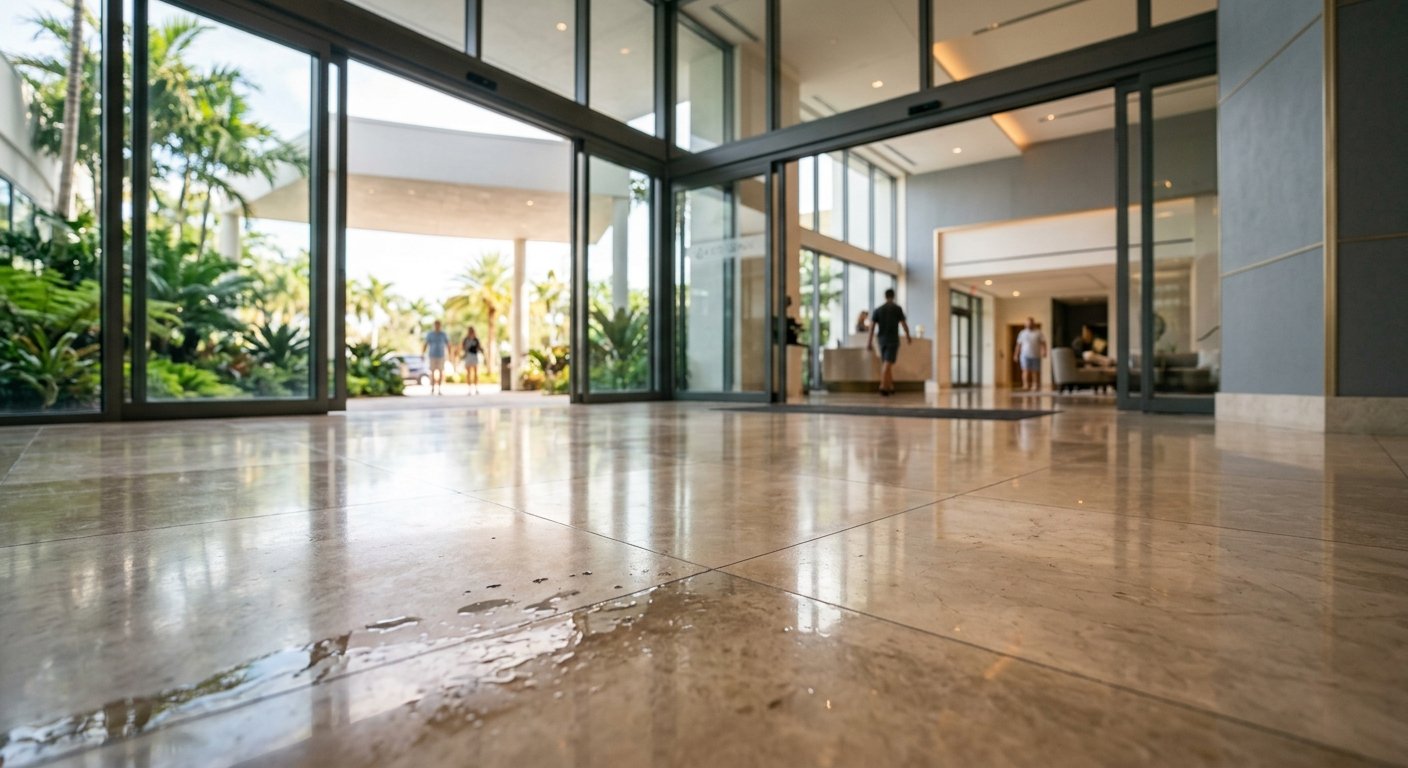
Premises liability in Florida is the legal principle that property owners and occupiers have a duty to maintain reasonably safe conditions for people who enter their property. When that duty is breached and someone is injured as a result, the injured person may have the right to seek compensation. This principle applies to private homes, retail stores, apartment complexes, hotels, and public spaces throughout Florida.
- Florida property owners owe different legal duties depending on the visitor’s status — invitee, licensee, or trespasser.
- To succeed in a premises liability claim, an injured person must prove the owner knew or should have known about the dangerous condition.
- Florida’s modified comparative fault rule, codified in Florida Statutes § 768.81, can reduce or bar recovery based on the injured person’s own percentage of fault.
- Most premises liability claims in Florida carry a two-year statute of limitations under Florida Statutes § 95.11(5)(a).
- An attorney experienced in Florida premises liability law can investigate the dangerous condition, preserve evidence, and advance your claim before deadlines pass.
What “Premises Liability” Actually Means
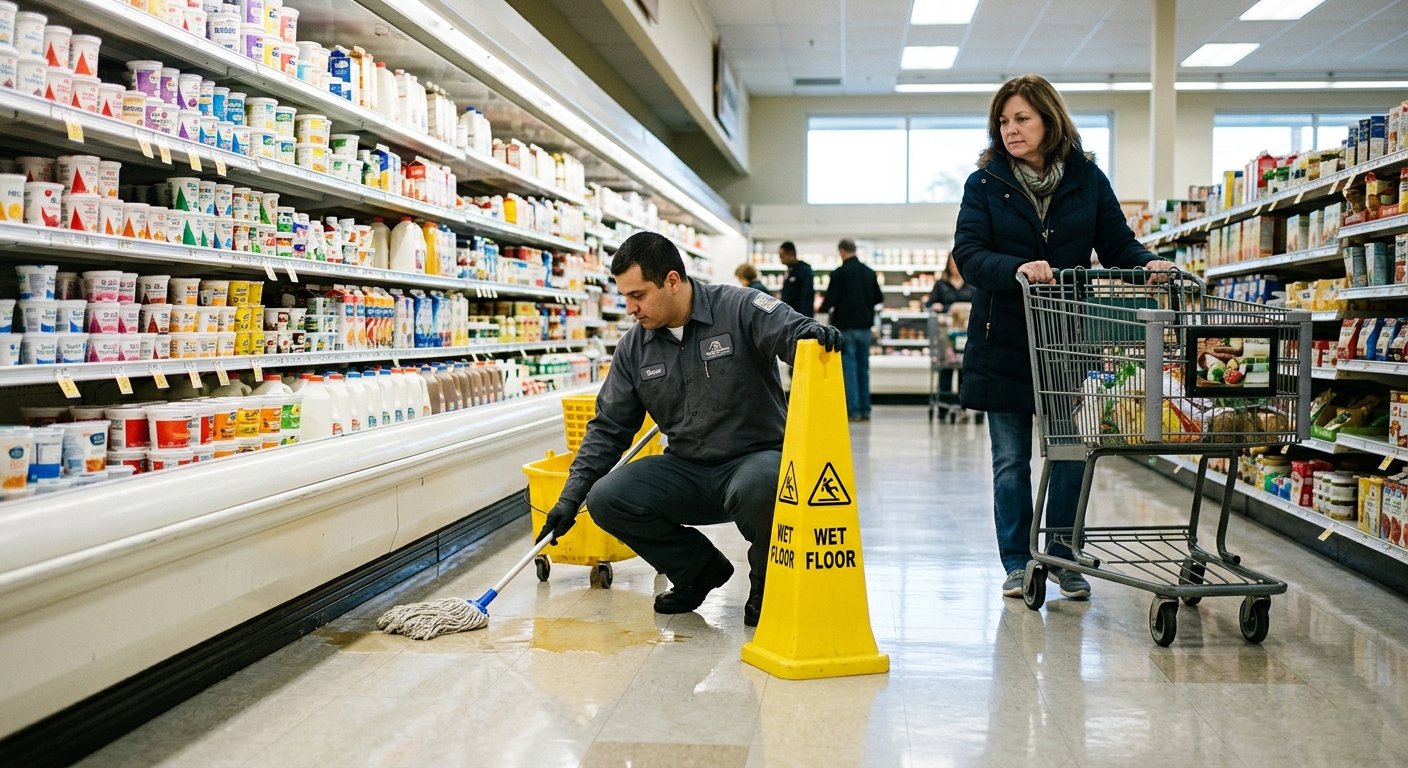
The phrase sounds technical, but the underlying concept is straightforward: people who own or control property are responsible for making it reasonably safe. If a supermarket floor has a spill that sat unaddressed for an hour and a shopper falls, or if an apartment complex fails to repair a broken stairwell railing and a tenant is injured, the property owner may be liable for the resulting harm. Florida courts evaluate these claims under the general law of negligence, which requires proof of duty, breach, causation, and damages.
Broward County sees a substantial volume of these cases, from slip-and-fall incidents in Fort Lauderdale shopping centers to pool injuries at Lauderhill apartment complexes. If you were hurt on someone else’s property in South Florida, understanding how Florida law classifies your visit is the essential first step.
Visitor Classifications Under Florida Law

The duty a property owner owes depends on why the injured person was on the property. Florida recognizes three categories:
Invitees
An invitee is someone who enters property with the owner’s express or implied invitation, typically for a business purpose — customers in a store, guests at a hotel, or patrons at a restaurant. Property owners owe invitees the highest duty of care: they must inspect for dangerous conditions, repair known hazards, and warn visitors of dangers that are not obvious.
Licensees
A licensee enters with the owner’s permission but for the visitor’s own purpose — a social guest, for example. Owners must warn licensees of known dangers but are not required to actively inspect for hidden hazards.
Trespassers
A trespasser enters without permission. Owners generally owe no duty to trespassers except to refrain from willful or wanton injury. Florida law does provide additional protection for child trespassers under the “attractive nuisance” doctrine, particularly concerning swimming pools and other hazardous features that may draw children onto a property.
If an insurance adjuster or defense attorney argues you were a trespasser or a licensee rather than an invitee, the legal standard the property owner must meet changes significantly. Establishing your correct visitor status is often one of the first strategic questions in a premises liability case.
The Four Elements of a Florida Premises Liability Claim
Duty
The property owner or occupier owed you a legal duty of care based on your status as a visitor and the nature of the property.
Breach
The owner failed to meet that duty — for example, by failing to fix a known hazard, failing to warn visitors, or failing to conduct reasonable inspections.
Causation
The breach of duty directly caused your injury. Florida courts require that the dangerous condition be the proximate cause of harm, not merely a background circumstance.
Damages
You suffered measurable harm — physical injury, medical expenses, lost wages, pain and suffering, or other compensable losses.
Common Premises Liability Scenarios in Florida
Florida’s mix of retail corridors, hospitality properties, residential complexes, and public facilities produces a wide range of premises liability claims. The most frequently encountered include:
- Slip and fall accidents caused by wet floors, unmarked spills, or deteriorated walking surfaces — among the most common claims handled under Florida slip and fall law.
- Negligent security in apartments, parking structures, and hotels, where inadequate lighting or absent security personnel enable assaults or robberies.
- Swimming pool injuries, particularly relevant in South Florida’s year-round pool culture, including failures to fence pools or post proper warnings.
- Construction site hazards where members of the public or workers are exposed to falling objects, open excavations, or unmarked dangers.
- Retail store injuries involving defective shelving, unsecured merchandise, or floor surfaces in poor repair.
Each scenario requires a careful examination of what the property owner knew, when they knew it, and what steps they took — or failed to take — in response. For a broader overview of how Florida courts handle these claims, the premises liability practice area at DiStefano Law describes the full range of property injury cases the firm handles throughout Florida.
Florida’s Comparative Fault Rule and What It Means for Your Claim
Florida follows a modified comparative fault system. Under Florida Statutes § 768.81, if you are found to be more than 50 percent at fault for your own injury, you are barred from recovering any compensation. If your fault is 50 percent or less, your recovery is reduced by your percentage of fault.
This rule means that property owners and their insurers frequently argue that the injured person was inattentive, wearing improper footwear, or ignored visible warning signs. These arguments are not automatically disqualifying, but they must be addressed with evidence. An attorney familiar with Florida premises liability law can gather surveillance footage, incident reports, and witness statements to counter fault-shifting arguments before they gain traction.
Establishing the property owner’s knowledge of a dangerous condition — and their failure to address it — is the central factual question in most Florida premises liability cases.
Deadlines That Apply to Premises Liability Claims
Florida Statutes § 95.11(5)(a) imposes a two-year statute of limitations on most personal injury claims, including premises liability actions. That period generally begins on the date of the injury. Missing this deadline almost always means losing the right to pursue compensation entirely.
Do not delay in consulting an attorney after a premises injury. Evidence — surveillance video in particular — is often overwritten within days or weeks. Incident reports filed at the scene can be obtained, witness memories are clearest soon after an event, and certain claims against government-owned property in Florida require a pre-suit notice under Florida Statutes § 768.28 within three years, with specific procedural requirements that differ from private claims.
If your injury occurred on property owned or operated by a Florida government entity — a public school, county-maintained sidewalk, or municipal facility — the claim process is different. Florida Statutes § 768.28 imposes a notice requirement before suit can be filed and caps recoverable damages in certain circumstances. Early legal consultation is essential.
What Compensation May Be Available
Compensation in a Florida premises liability case is designed to address both economic and non-economic losses. Economic damages include medical expenses (past and future), rehabilitation costs, lost wages, and diminished earning capacity. Non-economic damages include pain and suffering, loss of enjoyment of life, and emotional distress. In cases of gross negligence, punitive damages may also be available under Florida law, though they are subject to statutory caps.
DiStefano Law represents injured clients throughout Florida from its Broward County office. If you are in the Fort Lauderdale area, Palm Beach County, Miami-Dade County, or elsewhere in Florida, the firm’s attorneys handle premises liability matters directly — the founding attorney is personally involved in the cases the firm accepts.
Frequently Asked Questions
What must I prove to win a premises liability case in Florida?
You must establish four elements: that the property owner owed you a duty of care, that the owner breached that duty by failing to maintain safe conditions or warn of known dangers, that the breach caused your injury, and that you suffered compensable damages. The owner’s knowledge of the dangerous condition — actual or constructive — is often the most contested element.
How long do I have to file a premises liability claim in Florida?
Under Florida Statutes § 95.11(5)(a), most premises liability claims must be filed within two years of the injury date. Claims against government entities have additional procedural requirements under Florida Statutes § 768.28. Consulting an attorney promptly protects your ability to preserve evidence and meet all applicable deadlines.
Can I recover compensation if I was partly at fault for my injury?
Yes, provided you were not more than 50 percent at fault. Florida’s modified comparative fault rule under Florida Statutes § 768.81 reduces your recovery by your percentage of fault, but does not bar it entirely unless your share exceeds 50 percent. This makes it important to build a strong factual record that accurately attributes responsibility.
Does it matter that I did not see a “Wet Floor” sign?
The absence of a warning sign is often significant but is not automatically decisive. Florida law requires property owners to warn invitees of non-obvious dangers. If a hazard was present and no warning was posted, that fact supports a finding of breach. However, the owner may argue the danger was obvious or that you were inattentive. Both sides of that argument require evidence.
What should I do immediately after being injured on someone else’s property?
Report the incident to the property manager or owner and request that an incident report be completed. Photograph the hazardous condition and the surrounding area. Collect the names and contact information of any witnesses. Seek medical attention promptly, even if injuries seem minor at first. Then consult an attorney before making any statements to the property owner’s insurer.
Speak With a Florida Premises Liability Attorney
DiStefano Law has represented injured Floridians for more than 40 years from its office on West Oakland Park Boulevard in Lauderhill, Broward County. The firm handles premises liability claims — including slip and fall, negligent security, and swimming pool injuries — throughout Florida. There is no fee unless the firm recovers on your behalf.
If you were injured on someone else’s property and want to understand your legal options, the right time to act is now. Evidence disappears quickly, and deadlines are fixed by statute.
Schedule a Free Consultation
Speak directly with a Florida premises liability attorney — no fee unless we recover for you.

Robert DiStefano, Esq.
For more than 40 years, Robert DiStefano has represented South Florida accident victims in claims against insurance carriers. From his Fort Lauderdale office, he has personally handled motor vehicle, premises liability, medical malpractice, catastrophic injury, aviation, and wrongful death cases — recovering more than $100 million for the people he represents. More about Robert →