

When a driver flees the scene of a crash in Broward County, injured victims can still pursue compensation through their own uninsured motorist coverage, Florida’s no-fault PIP system, and — if the driver is later identified — a direct liability claim. Florida law imposes strict deadlines and reporting requirements, so acting promptly after a hit-and-run collision is essential to preserving your rights.
- Florida requires you to report any crash involving injury or significant property damage to law enforcement immediately — do not leave the scene before officers arrive.
- Your uninsured motorist (UM) coverage is typically the primary source of compensation when the at-fault driver is never identified.
- Florida’s PIP system covers 80% of medical bills and 60% of lost income up to $10,000, but only if you seek care within 14 days under Fla. Stat. § 627.736(1).
- The negligence statute of limitations in Florida is two years from the date of the crash under Fla. Stat. § 95.11(5)(a).
- An attorney can help gather witness statements, surveillance footage, and police reports before evidence disappears.
What Florida Law Requires After a Hit-and-Run
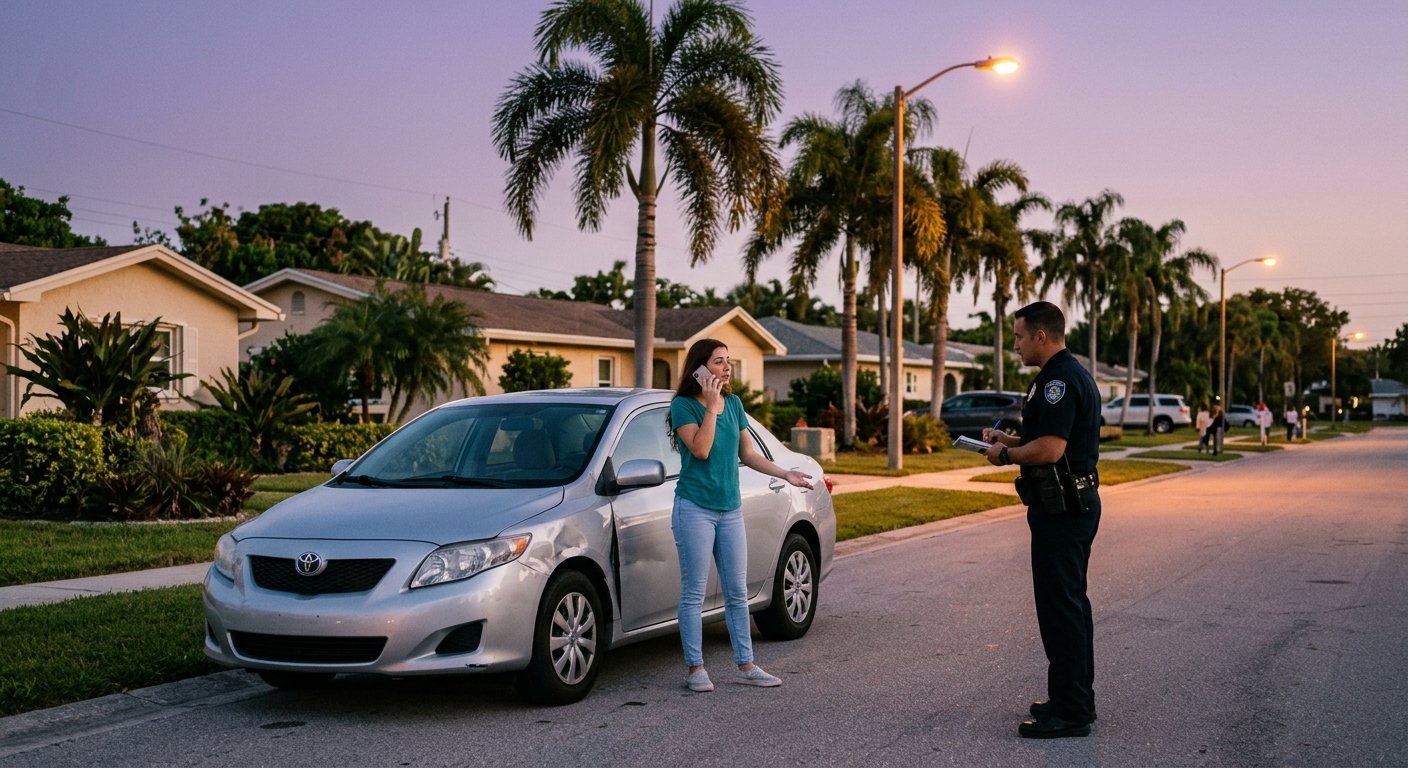
Florida law obligates every driver involved in a crash to stop, render reasonable assistance, and exchange information. When the other driver breaks that obligation and flees, you are still bound by your own duties. Report the collision to law enforcement as soon as possible. Under Fla. Stat. § 316.065, a crash that causes injury, death or at least $500 in property damage must be reported to police right away, by the quickest means available. Obtaining an official crash report number is not a formality — it is frequently required before an insurance claim can proceed.
Broward County’s major corridors — I-95, I-595, US-1, and Oakland Park Boulevard — see substantial daily traffic volume, and hit-and-run incidents occur on all of them. The Broward County courthouse, located at 201 SE 6th Street in Fort Lauderdale, sits in Florida’s Seventeenth Judicial Circuit. Any civil lawsuit arising from a Broward County crash is filed in that circuit, and local procedural timelines apply from the date of filing forward.
Immediate Steps at the Scene
Call 911
Request police and emergency medical services immediately. Do not assume injuries are minor — adrenaline often masks pain. An official police report creates the foundational record for every claim that follows.
Document Everything You Can
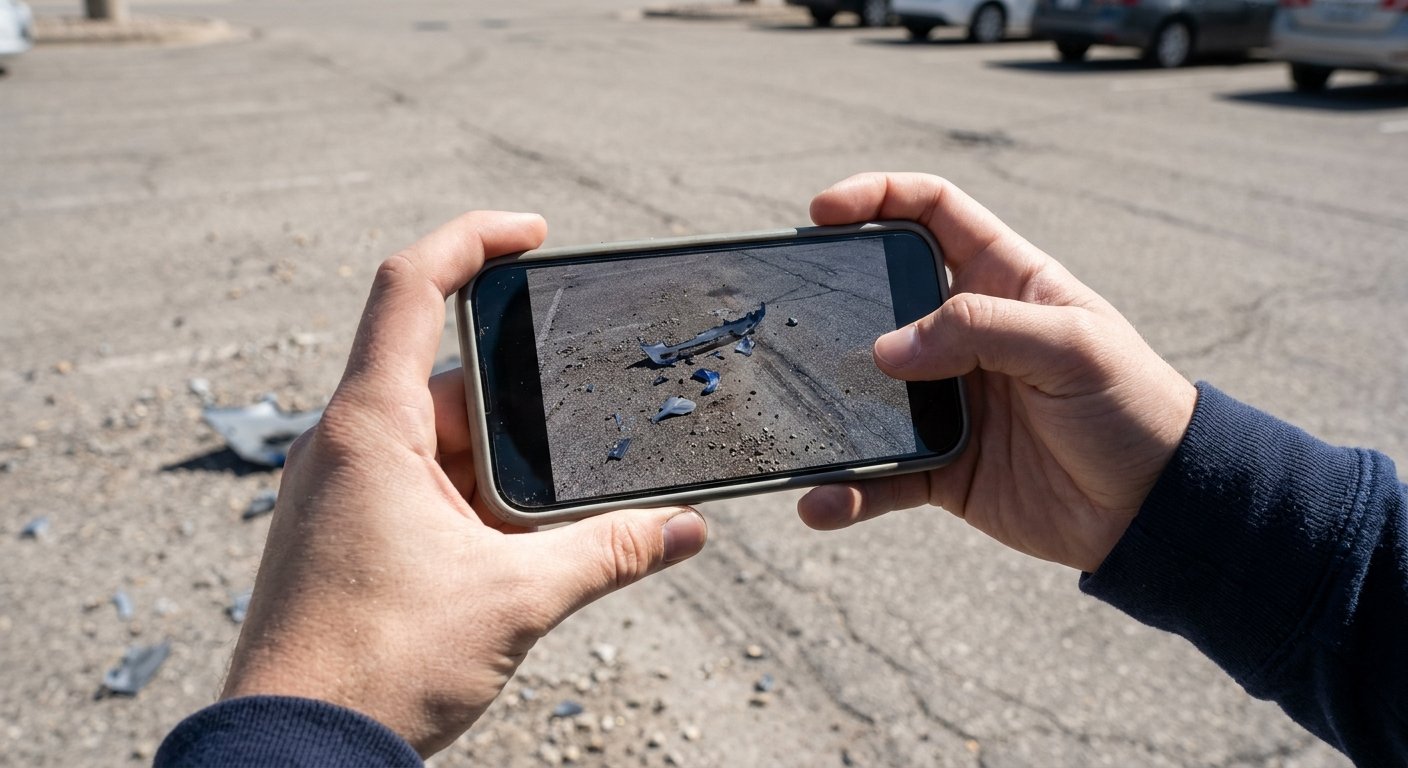
Photograph the scene, your vehicle, skid marks, and any debris. If you observed any portion of the fleeing vehicle’s license plate, color, make, or model, write it down or voice-record it immediately while your memory is clearest.
Identify Witnesses
Ask bystanders for their names and contact information. Nearby businesses may have exterior surveillance cameras. Time is critical — footage is often overwritten within 24 to 72 hours.
Seek Medical Evaluation Within 14 Days
Florida’s PIP statute pays medical benefits only if you get initial medical care within 14 days of the crash. Miss that window and PIP pays nothing toward your medical bills. The full $10,000 also requires a physician, dentist, physician assistant or nurse practitioner to find an emergency medical condition; without that finding, medical benefits are capped at $2,500.
Notify Your Own Insurance Carrier
Report the collision to your insurer promptly. Failure to cooperate with your own policy’s terms can jeopardize your UM and PIP claims. Provide factual information; avoid speculating about fault or the extent of your injuries at this early stage.
How Florida’s PIP System Applies to Hit-and-Run Crashes

Florida is a no-fault state, meaning your own Personal Injury Protection coverage responds first regardless of who caused the crash. Under Fla. Stat. § 627.736(1), PIP pays 80% of reasonable medical expenses and 60% of lost income up to a combined limit of $10,000 — but only if you receive initial medical care within 14 days of the collision. The full $10,000 for medical care also requires a physician, dentist, physician assistant or nurse practitioner to determine that you had an emergency medical condition. If a provider finds no emergency medical condition, medical benefits are limited to $2,500. PIP does not compensate for pain and suffering, which is why uninsured motorist coverage becomes so important in hit-and-run cases.
The 14-day PIP treatment window begins on the date of the crash — not the date you decide you feel unwell. Even if symptoms seem manageable at first, see a licensed medical provider within that window to protect your full PIP entitlement.
Uninsured Motorist Coverage: Your Primary Safety Net
When the at-fault driver flees and is never identified, uninsured motorist coverage is typically the most significant source of compensation available to you. UM coverage is not mandatory in Florida, but insurers are required to offer it and policyholders must reject it in writing if they decline. If you carry UM coverage, it steps into the shoes of the absent at-fault driver and can compensate you for medical expenses beyond PIP limits, lost income, and pain and suffering.
Florida law allows “stacked” UM coverage, which can multiply the per-vehicle limit by the number of vehicles on the policy. Reviewing your declarations page carefully — or having an attorney review it — may reveal more protection than you expected. For a broader overview of your rights after a motor vehicle collision, see our Florida car accident practice area page.
Law enforcement investigations, traffic cameras, and witness tips sometimes lead to the responsible driver days or weeks after the crash. If that occurs, a direct liability claim against that driver — and their insurer — becomes available in addition to your UM claim. Preserve all documentation and keep your attorney informed of any developments.
Key Deadlines You Cannot Afford to Miss
Florida’s negligence statute of limitations gives injured parties two years from the date of the crash to file a civil lawsuit, under Fla. Stat. § 95.11(5)(a), which applies to negligence claims arising after March 24, 2023. Two years may feel like sufficient time, but critical evidence — surveillance footage, witness recollections, electronic data from nearby traffic systems — degrades rapidly. Waiting significantly reduces the pool of evidence available to support your case.
If a government-owned vehicle was involved in the hit-and-run, an additional notice requirement applies: written notice to the relevant government entity within three years under Fla. Stat. § 768.28(6). This deadline runs parallel to, not in place of, the standard limitations period, and missing it can bar a claim against a public entity entirely.
Evidence — surveillance footage, witness accounts, electronic data — degrades rapidly after a crash. Early action is not optional; it is the foundation of every viable claim.
Avoiding procedural missteps is as important as meeting deadlines. Our article on common errors that can undermine a Florida injury claim details the specific actions that can weaken a case before litigation even begins.
Comparative Fault in Hit-and-Run Cases
Florida’s modified comparative fault rule, Fla. Stat. § 768.81(6), bars recovery entirely if a claimant is found more than 50% responsible for the crash. In a hit-and-run scenario, this question often centers on whether the injured driver contributed to the collision — for example, by failing to yield or by operating unsafely. Because the fleeing driver’s own account is absent, insurers sometimes attempt to assign greater fault to the remaining party. Thorough documentation at the scene and prompt legal representation help counter unsupported fault assignments.
How Legal Representation Strengthens a Hit-and-Run Claim
An attorney’s involvement in a hit-and-run case serves several practical functions that are difficult to replicate on your own. Counsel can issue evidence-preservation letters to businesses near the crash site within hours of being retained, formally requesting that surveillance footage not be overwritten. Attorneys can also coordinate with law enforcement on any ongoing investigation, retain accident reconstruction experts where the facts are disputed, and negotiate directly with your own insurer over the value of your UM claim.
At DiStefano Law, the founding attorney is personally involved in every case the firm accepts. Robert DiStefano has practiced Florida personal injury law for more than 40 years, and the firm represents injured clients throughout Florida from its Broward County office in Lauderhill. Spanish-language assistance is available. If you were injured in a hit-and-run in Fort Lauderdale or anywhere in Broward County, our Fort Lauderdale motor vehicle accident representation page provides additional information specific to this area.
Frequently Asked Questions
Can I recover compensation if the hit-and-run driver is never found?
Yes. If you carry uninsured motorist coverage, it applies when the at-fault driver is unidentified. Florida’s PIP coverage also responds regardless of fault. The key is having the right coverage in place before a crash occurs and filing all claims according to your policy’s requirements.
What if I do not have uninsured motorist coverage?
Without UM coverage and with an unidentified at-fault driver, your recovery options are limited primarily to PIP benefits. If the driver is eventually identified, a liability claim becomes available. This is why Florida attorneys consistently recommend carrying UM coverage even though Florida law does not require it.
How long do I have to file a claim after a hit-and-run in Florida?
Florida’s negligence statute of limitations is two years from the date of the crash under Fla. Stat. § 95.11(5)(a) for claims arising after March 24, 2023. Insurance policy deadlines for reporting a claim are often much shorter. Review your policy promptly and consult an attorney without delay.
Does Florida require me to report a hit-and-run crash?
Yes. Florida law requires drivers involved in crashes causing injury, death, or significant property damage to report the collision to law enforcement. Failure to report can complicate insurance claims and may have legal consequences of its own.
What evidence is most important in a hit-and-run case?
The official police report, photographs from the scene, witness contact information, and surveillance footage from nearby businesses or traffic cameras are typically the most valuable. Electronic toll and traffic camera data can sometimes be obtained through law enforcement. All of this evidence should be secured as quickly as possible after the crash.
Injured in a Hit-and-Run? Speak With an Attorney Today.
DiStefano Law offers a free consultation with no fee unless we recover — contact us to discuss your situation and understand your options before critical evidence is lost.

Robert DiStefano, Esq.
For more than 40 years, Robert DiStefano has represented South Florida accident victims in claims against insurance carriers. From his Lauderhill office, he has personally handled motor vehicle, premises liability, medical malpractice, catastrophic injury, aviation, and wrongful death cases — recovering more than $100 million for the people he represents. More about Robert →