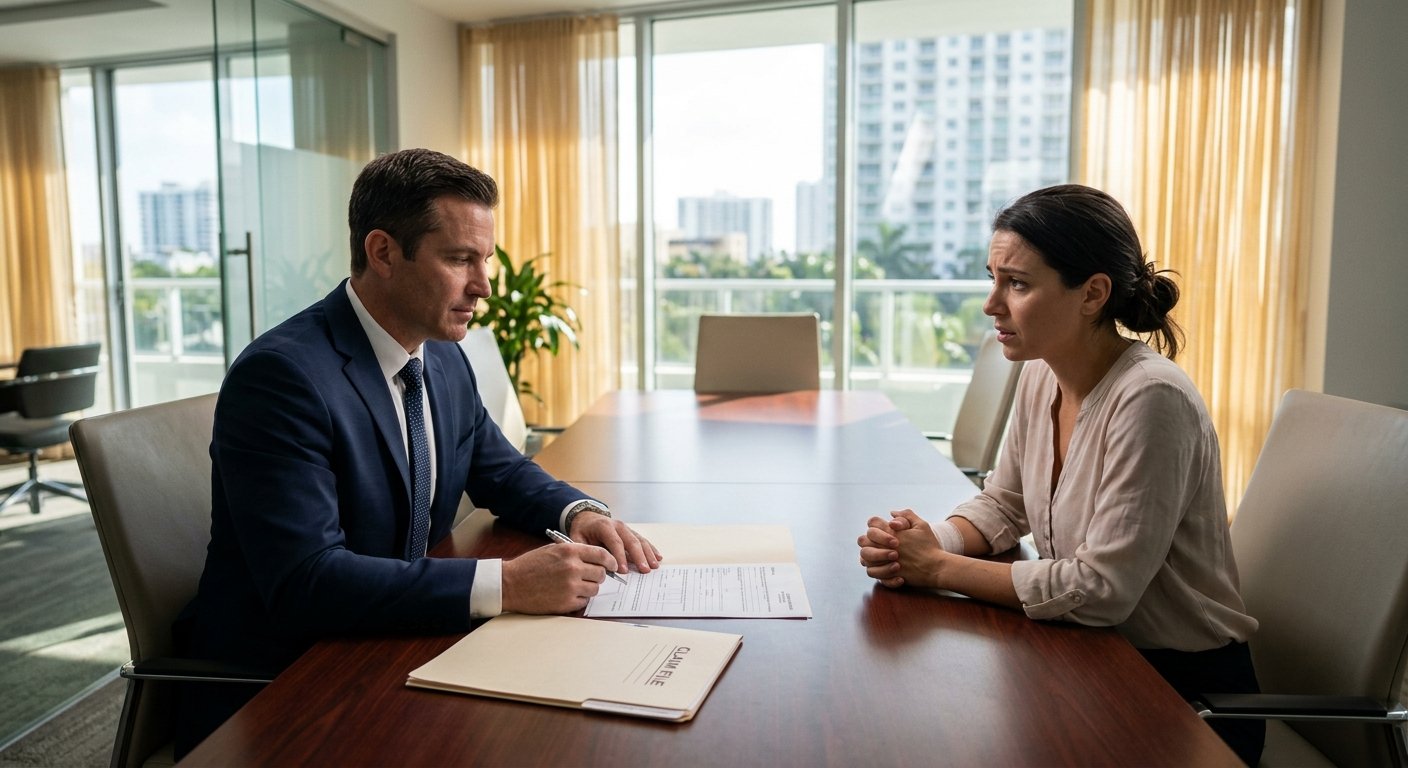
After an accident in Florida, insurance adjusters will contact you quickly — often within 24 hours. What you say to them can directly reduce or eliminate your compensation. Florida injury claimants should understand that adjusters are trained to gather information that minimizes claim payouts. Knowing what not to say, and when to involve an attorney, is essential to protecting your recovery.
- You are not legally required to give a recorded statement to the other party’s insurer.
- Common phrases like “I’m okay” or “I didn’t see it coming” can be used to reduce your claim’s value.
- Florida’s comparative negligence law means any admission of fault — however partial — can lower your compensation.
- Adjusters are professionals trained in claim evaluation; injured individuals are typically not.
- Consulting a Florida personal injury attorney before speaking with any adjuster is strongly advisable.
The Call You Did Not Expect
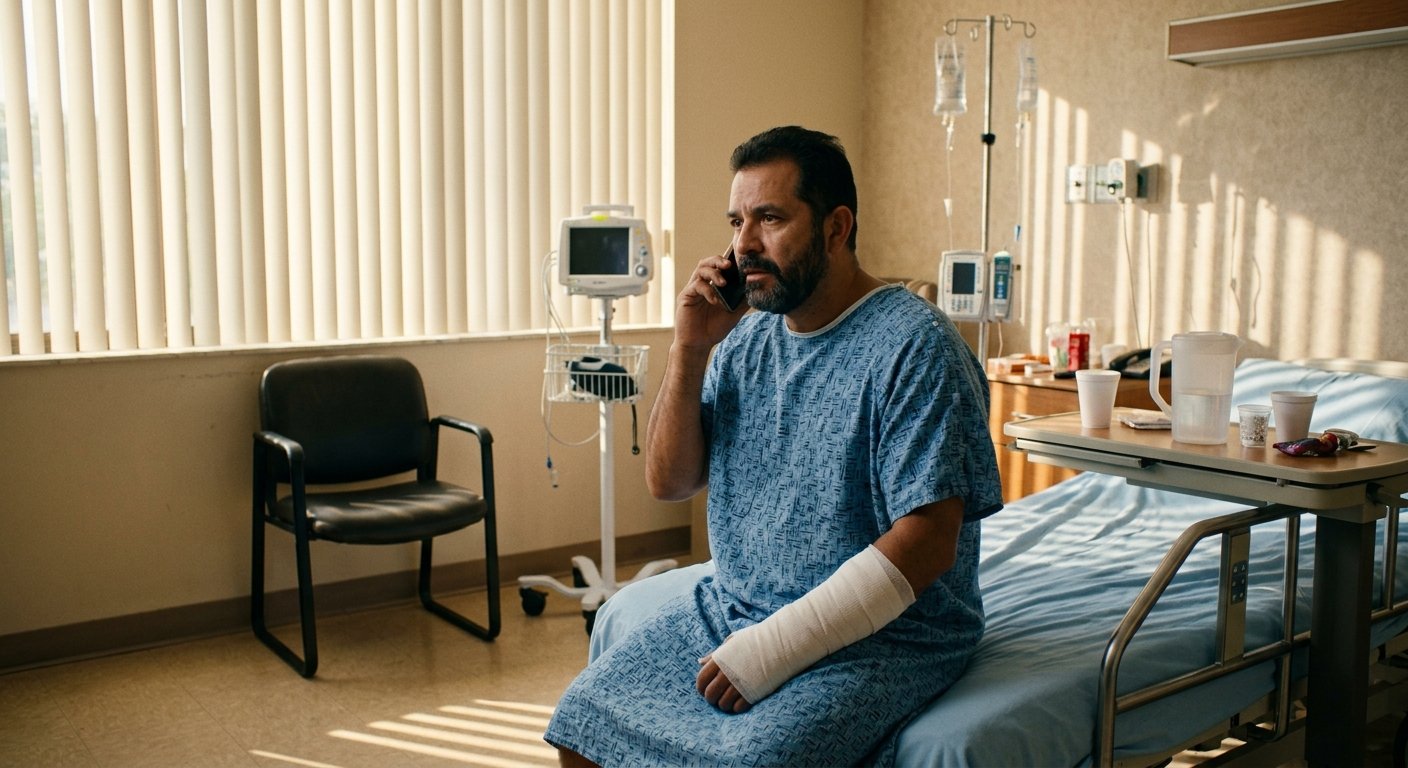
You are still recovering from the shock of a collision on I-95 or a fall at a Pompano Beach shopping center. Your phone rings. It is an insurance adjuster — polite, sympathetic, and apparently eager to help. This scenario plays out across Broward County every day. What most injury victims do not realize is that this call is not primarily about helping them. It is about gathering information that the insurer can use to assess, and often limit, its financial exposure.
Understanding insurance adjuster tactics in Florida is not about viewing the process with hostility. It is about understanding the professional context. Adjusters work for insurance companies. Their job is to resolve claims efficiently and within guidelines that protect the insurer’s bottom line. That structural reality shapes every question they ask.
Do not assume a friendly tone means the conversation is informal. Every recorded statement and every casual remark made during an adjuster call can be documented and referenced later in your claim or in litigation. Treat all adjuster communications as official interactions.
How Adjusters Are Trained to Listen
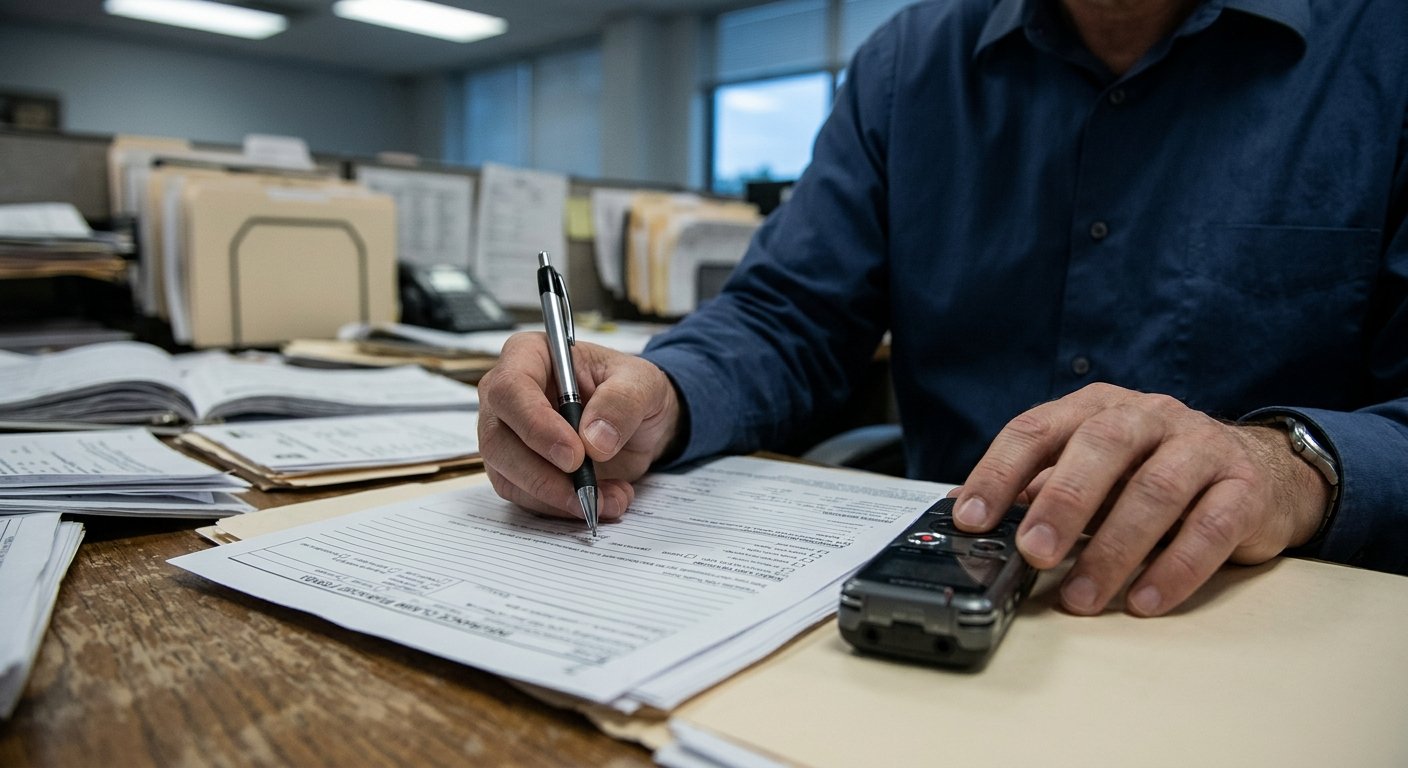
Insurance claim adjusters receive specific training in how to evaluate statements from claimants. They listen for inconsistencies, qualifications, and spontaneous admissions. The following are among the most commonly used phrases that work against injury victims — and why.
“I’m Fine” or “I Feel Okay”
Many injuries — including whiplash, traumatic brain injuries, and soft tissue damage — do not produce obvious symptoms in the hours immediately following an accident. If you tell an adjuster you feel fine, that statement becomes part of the claim record. When symptoms emerge days later, the insurer may argue your injuries are unrelated to the accident. The Centers for Disease Control and Prevention notes that traumatic brain injury symptoms can be delayed, making early self-assessment unreliable.
“I’m Sorry” or “It May Have Been Partly My Fault”
Apologizing is a natural human response to stressful situations. In the context of an insurance claim, however, an apology can be interpreted as an admission of fault. Under Florida’s modified comparative negligence standard — revised in 2023 — a claimant found to be more than 50 percent at fault cannot recover damages. Even a finding of partial fault reduces your compensation proportionally. Any statement suggesting shared responsibility gives the adjuster grounds to push that percentage upward.
“I Didn’t See the Other Driver” or “It Happened So Fast”
These phrases seem like neutral descriptions of the event, but adjusters are trained to interpret them as potential indicators of inattentiveness on the claimant’s part. Saying you did not see something approaching can be framed as a failure to maintain situational awareness — a contributing factor to the accident.
The Recorded Statement: What Florida Law Says

One of the most critical insurance adjuster tactics in Florida involves requesting a recorded statement. Adjusters often ask for this early in the claims process, framing it as a routine step. Florida law does not require you to provide a recorded statement to the opposing party’s insurance company. Your own insurer may have a different contractual requirement, depending on the terms of your policy — which is precisely why reviewing your policy with an attorney matters.
A recorded statement after an accident in Florida creates a permanent record. If your account of events evolves as you remember more details — which is normal and expected following trauma — that evolution can be characterized as inconsistency. Adjusters may use apparent inconsistencies to challenge your credibility, even when the changes reflect legitimate memory recovery.
A recorded statement creates a permanent record — and recorded words cannot be taken back once they are in the file.
What You Should Do Instead
Protecting your claim does not require confrontation. It requires awareness and appropriate caution. The following steps are advisable for anyone who has been injured in an accident in Fort Lauderdale, Hollywood, Coral Springs, or elsewhere in Broward County.
Seek Medical Attention Immediately
Obtain a medical evaluation as soon as possible, even if you feel uninjured. Documented medical visits establish a timeline that links your injuries to the accident.
Document Everything You Can
Photograph the scene, gather witness contact information, and retain all medical records, bills, and correspondence related to your injury and treatment.
Limit What You Say to Adjusters
Provide only basic identifying information — your name, contact information, and the date of the accident. Decline to give detailed accounts or recorded statements until you have spoken with an attorney.
Consult a Florida Personal Injury Attorney
An attorney experienced in Florida injury claims can communicate with adjusters on your behalf, review settlement offers, and ensure your rights under Florida law are preserved.
Do Not Sign Anything Without Legal Review
Early settlement offers may appear reasonable but often do not account for future medical costs, lost earning capacity, or long-term pain and suffering. Do not sign a release without attorney review.
Why Early Settlement Offers Deserve Scrutiny
Insurance companies have a legitimate interest in closing claims quickly. Early settlement reduces their uncertainty. When an adjuster presents an offer within days of an accident, it is typically before the full scope of your injuries is known. Soft tissue injuries, orthopedic conditions, and neurological effects may not be fully diagnosable for weeks or months. Accepting an early settlement and signing a release generally bars you from seeking additional compensation later — regardless of how your condition develops.
The Florida Courts system provides remedies for injury victims, but those remedies depend on claims being preserved properly from the outset. Once a release is signed, those avenues close. Florida’s statute of limitations for personal injury claims is generally two years from the date of injury, as established under Florida Statutes Section 95.11. Do not delay in seeking legal guidance.
DiStefano Law serves a diverse South Florida community that includes many Spanish-speaking residents in Broward County and surrounding areas. If you or a family member are more comfortable discussing your situation in Spanish, our team can accommodate that. Understanding your rights fully — in the language you are most comfortable with — is fundamental to making informed decisions.
Frequently Asked Questions
Do I have to give a recorded statement to the insurance adjuster?
You are not legally obligated to provide a recorded statement to the opposing party’s insurance company in Florida. Your own insurer may require a statement under your policy terms, but even then, consulting an attorney before doing so is advisable. An attorney can help you prepare and ensure your words are not taken out of context.
Can what I say on social media affect my injury claim?
Yes. Adjusters and defense attorneys routinely review claimants’ social media profiles during the claims process. Posts that suggest physical activity, travel, or a positive mood can be used to contest the severity of your injuries. Limiting or pausing social media activity after an accident is a prudent step.
What if I already gave a recorded statement before speaking with an attorney?
A prior recorded statement does not eliminate your claim, but it does create a record that your attorney will need to address. Contacting a Florida personal injury attorney as soon as possible after realizing this gives your legal team the opportunity to assess the statement’s content and develop an appropriate strategy.
How does Florida’s comparative negligence law affect my claim?
Under Florida’s modified comparative negligence system, your compensation is reduced by your percentage of fault. If you are found 30 percent responsible, you recover 70 percent of your damages. If you are found more than 50 percent at fault, you recover nothing. Statements that suggest shared responsibility can directly affect how fault is apportioned.
How soon should I contact a personal injury attorney after an accident?
Contact an attorney as early as possible — ideally before speaking with any adjuster. Early legal involvement allows your attorney to communicate with insurers on your behalf, preserve evidence, and ensure no critical deadlines are missed. DiStefano Law offers free consultations for injured individuals throughout Broward County and South Florida.
Protect Your Claim Before You Say Another Word
If you have been injured in an accident in Fort Lauderdale, Hollywood, Coral Springs, or anywhere in Broward County, speaking with a licensed Florida personal injury attorney before your next adjuster conversation could be the most important step you take. DiStefano Law offers free, no-obligation consultations — and you pay no attorney fees unless we recover compensation for you.
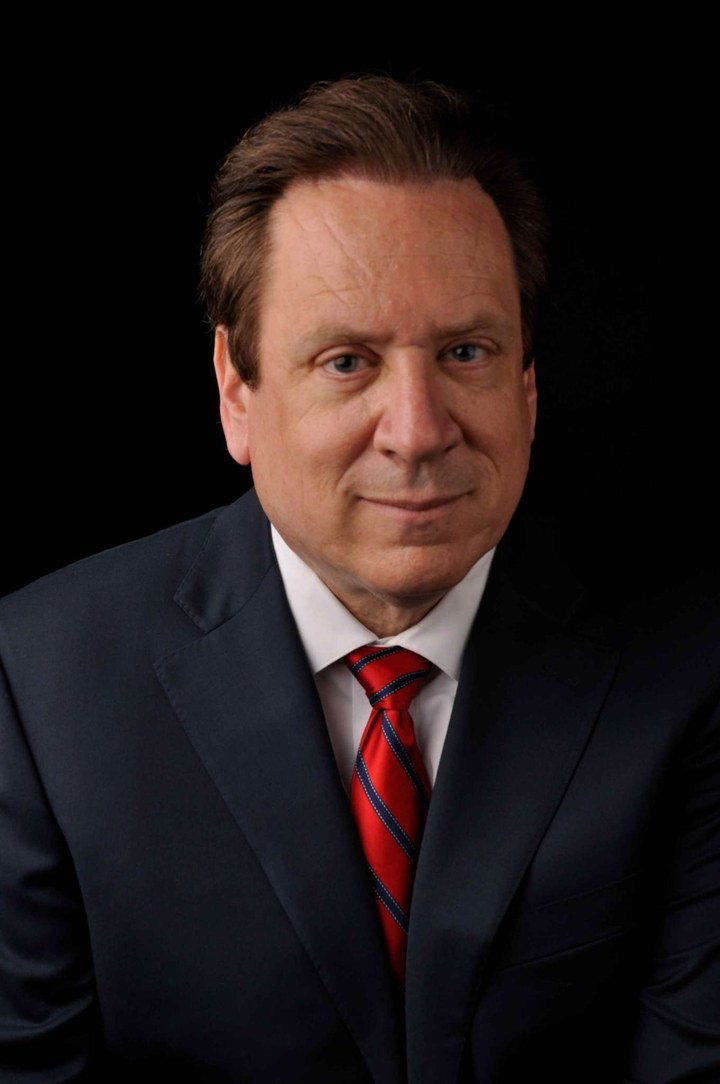
Robert DiStefano, Esq.
For more than 40 years, Robert DiStefano has represented South Florida accident victims in claims against insurance carriers. From his Fort Lauderdale office, he has personally handled motor vehicle, premises liability, medical malpractice, catastrophic injury, aviation, and wrongful death cases — recovering more than $100 million for the people he represents. More about Robert →