
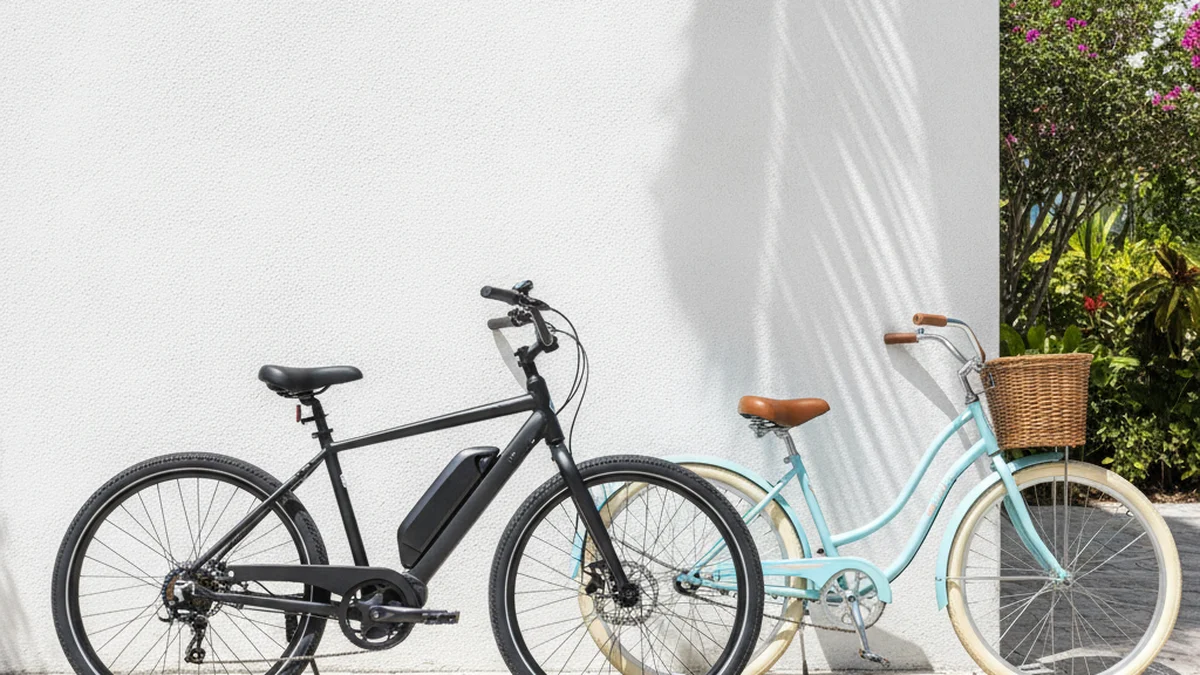
Florida roads and paths have seen a sharp increase in electric bicycle traffic in recent years. Riders on Fort Lauderdale’s A1A beach corridor, Orlando’s International Drive, and the trails around Sarasota travel alongside—and sometimes collide with—motor vehicles. When a crash happens, the question that follows is natural: does it matter legally that the bicycle had a motor?
On paper, Florida law treats e-bikes almost identically to conventional bicycles. In practice, an e-bike crash often involves distinct injury patterns, a potential product-liability dimension, and insurance coverage questions that do not arise in an ordinary bicycle case. Understanding those differences can affect both what a rider is entitled to recover and the complexity of pursuing a claim.
What Florida Law Says About E-Bikes
Florida defines an electric bicycle under § 316.003(3), Fla. Stat. as a bicycle with fully operable pedals and a motor of less than 750 watts. The statute creates three classes: Class 1 (pedal-assist only, motor stops at 20 mph), Class 2 (throttle-capable, motor stops at 20 mph), and Class 3 (pedal-assist only, motor assists up to 28 mph). Class 3’s higher top speed is a meaningful distinction after a crash.
Under § 316.20655, Fla. Stat., an e-bike and its rider have the same rights and duties as a conventional bicycle and rider. An e-bike may be ridden where bicycles are allowed; local governments may restrict Class 3 models from certain shared-use paths, but the default rule is parity.
Three misconceptions are worth correcting directly. An e-bike meeting the statutory definition requires no vehicle registration and no driver’s license. The helmet requirement under § 316.2065, Fla. Stat. applies to riders under 16—adult riders are not legally required to wear one, though doing so is advisable.
Where the Practical Differences Begin: Speed and Injury Severity
The legal parity between e-bikes and conventional bicycles does not eliminate the practical differences that emerge after a crash. The most significant is speed. A Class 3 e-bike can reach 28 mph without the sustained exertion a conventional cyclist must expend to match that pace. Riders may be moving faster than a driver, pedestrian, or other path user expects.
Higher speeds translate directly into greater crash energy. Injuries on roads like Orlando’s International Drive or Naples’ Tamiami Trail (US-41) frequently include more serious orthopedic injuries, head trauma, and longer recovery periods than comparable conventional bicycle crashes. The damages at stake in an e-bike claim therefore tend to be larger—which makes the legal analysis more consequential.
Florida’s modified comparative negligence rule under § 768.81, Fla. Stat. (revised by HB 837, 2023) means a plaintiff found more than 50% at fault recovers nothing; lesser fault reduces recovery proportionally. In a high-speed e-bike crash, disputes about who bore what percentage of responsibility can determine whether a seriously injured rider recovers at all.
The Product-Liability Dimension Unique to E-Bikes
A conventional bicycle is a mechanically simple device. An e-bike carries a lithium-ion battery pack, a motor, a battery management system, and associated wiring—each a potential source of defect. Battery failures can cause overheating or loss of control; motor control failures can produce unexpected acceleration or loss of assist. When a component defect contributed to the crash or to injury severity, the rider may have a claim against the manufacturer, importer, or distributor of that component—in addition to any claim against an at-fault driver. For a detailed look at battery-specific issues, see our article on e-bike battery fires and product liability in Florida.
Preserving evidence of a product defect requires prompt action. The e-bike should be secured rather than repaired, discarded, or returned to a rental company before an attorney can arrange for inspection.
Insurance and Coverage Nuances
Florida’s personal injury protection (PIP) statute (§ 627.736, Fla. Stat.) provides a baseline of $10,000 in benefits through motor-vehicle insurance policies. A rider must seek treatment within 14 days of the accident to preserve PIP eligibility. Because an e-bike is not a registered motor vehicle, the rider typically does not carry a motor-vehicle policy on the e-bike itself. Whether the rider’s own PIP—from a household auto policy—covers the crash depends on specific policy language. Homeowners or renters coverage may apply in some cases but not others. Rental e-bikes add further questions about operator liability and platform coverage. These puzzles are less common in conventional bicycle cases and require careful analysis.
Fault, Comparative Negligence, and the Importance of Evidence
The same fault framework that governs car accident cases applies to e-bike crashes. A driver who fails to yield, opens a car door into a rider’s path, or violates a right-of-way can be held liable. A rider who runs a red light, rides without required lights after dark, or exceeds the class speed limit of the path they are on may share fault. Under the 2023 revision to § 768.81, Fla. Stat., shared fault exceeding 50% eliminates recovery entirely; a lesser percentage reduces it proportionally.
Gathering evidence promptly after a crash is therefore important: photographs of the scene and all vehicles; witness contact information; the police report; and records of medical treatment beginning as close to the crash date as possible. Preserving the e-bike itself—before any repair or return—is essential when a component failure may have contributed to the crash or the injury.
Under § 95.11, Fla. Stat., most negligence claims must be filed within two years of the injury date. Riders injured in the Fort Myers River District, along Sarasota’s Legacy Trail, or elsewhere in Florida face this same deadline, and missing it ordinarily bars the claim entirely.
Why E-Bike Claims Can Be More Complex Than Conventional Bicycle Claims
To summarize the distinctions that matter most after a crash:
- E-bikes—especially Class 3 models—operate at higher speeds, which typically increases injury severity and the value of the damages at issue.
- A defective motor, battery, or control system can create a product-liability claim against the manufacturer or distributor that does not arise in a conventional bicycle crash.
- Insurance coverage for medical bills and lost wages requires careful analysis because e-bikes are not registered motor vehicles and no single policy automatically applies.
- Modified comparative negligence means the percentage of fault attributed to the rider can reduce or eliminate recovery, making the investigation and presentation of evidence more consequential.
- Evidence preservation—including the e-bike itself—is more critical because the device may be both a witness to the crash and the subject of a product claim.
For a broader overview of the legal landscape governing these crashes, the Florida E-Bike Accident Guide addresses the full range of issues riders and their families encounter.
Why DiStefano Law
DiStefano Law LLC is founded and led by Robert DiStefano, Esq., with more than 40 years of Florida personal-injury practice and more than $100 million recovered for injured Floridians. The firm is based in Fort Lauderdale and represents clients throughout the state—by phone, email, and video, appearing in the appropriate judicial circuit when a case requires it. Robert DiStefano personally handles every case the firm accepts.
The firm’s e-bike accident practice addresses the full range of issues these cases present, from identifying all responsible parties to analyzing coverage options and preserving time-sensitive evidence. The firm’s motor-vehicle accident practice page provides broader context on how these claims fit within Florida’s personal-injury framework.
Frequently asked questions
Does Florida law treat e-bikes and bicycles the same way?
Under § 316.20655, Fla. Stat., an e-bike and its rider have the same legal rights and duties as a conventional bicycle and rider. The rules of the road are the same. However, the practical differences after a crash—higher speeds, product-liability questions, and insurance coverage nuances—can make an e-bike claim considerably more complex.
Do I need a license or registration to ride an e-bike in Florida?
No. An electric bicycle that meets the definition in § 316.003(3), Fla. Stat.—a bicycle with fully operable pedals and a motor of less than 750 watts—does not require registration or a driver’s license. None of Florida’s three e-bike classes (1, 2, or 3) requires licensing or registration.
Can I recover damages if the e-bike’s battery or motor was defective?
Potentially yes. When a defective component contributed to the crash or the injury, the manufacturer, importer, or distributor may be liable in addition to any at-fault driver. These claims require prompt evidence preservation—the e-bike should be secured and not repaired or returned before an attorney arranges for inspection.
What is the deadline to file an e-bike injury claim in Florida?
Under § 95.11, Fla. Stat., most personal-injury claims must be filed within two years of the injury date. Missing that deadline ordinarily bars the claim. Because building and filing a case properly takes time, speaking with an attorney well before the deadline is advisable.
If you or a family member was injured in an e-bike crash in Florida, DiStefano Law offers a free, confidential, same-day case review (Monday through Friday). Call (954) 572-8000 or visit the contact page to get started. There is no fee unless we recover for you.