
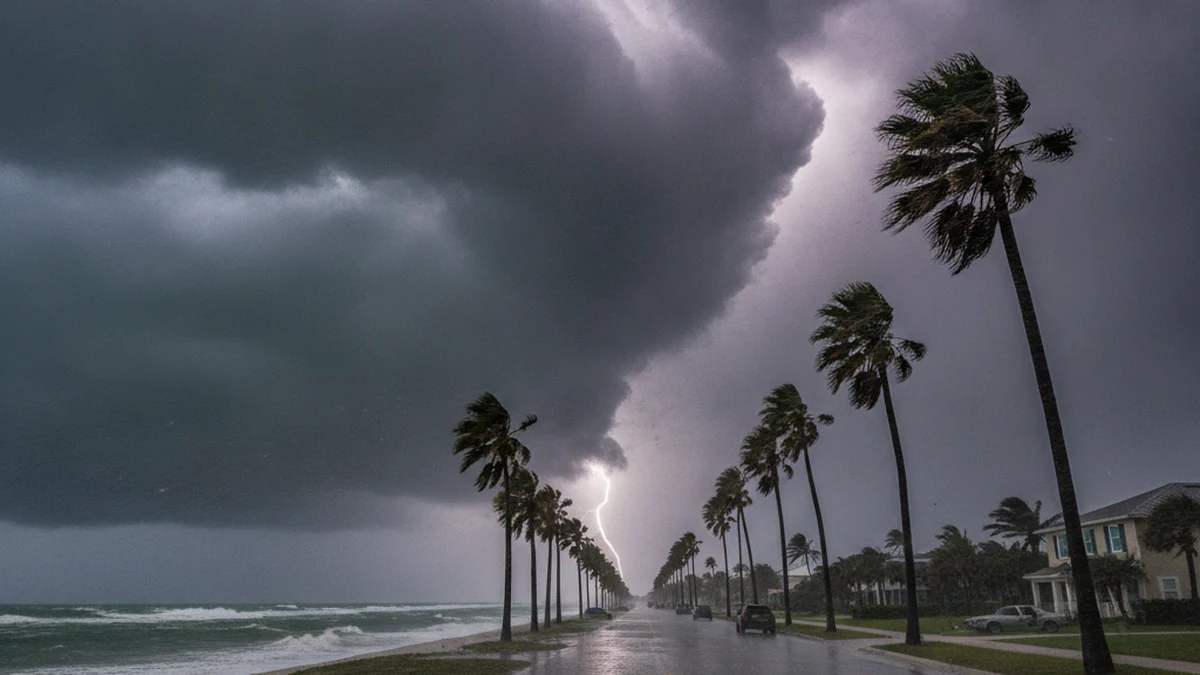
Every year from June through November, South Florida lives under the threat of a storm. Most of us know the drill — stock up on water, charge the phones, watch the cone. What people think about less is what the roads and parking lots turn into once the wind and rain arrive, and in the days right after. I have practiced personal-injury law in Broward County for more than 40 years, and hurricane season brings a wave of crashes and fall injuries that have a lot to do with the storm and little to do with bad luck. Here is how people get hurt, who can be held responsible, and what you can do to protect your claim.
Why Storms Mean More Crashes in Broward
A hurricane, or even a strong tropical storm, does three things to our roads at once: it knocks out the lights, scatters debris, and then dumps everyone back onto the streets at the same time once it passes. Each creates a different kind of wreck, and I see all of them every season:
- Dark and dead traffic signals. When the power goes down, signals at major intersections go dark. Oakland Park Boulevard, University Drive, State Road 7 — intersections that normally run on a green-yellow-red rhythm suddenly have nothing, and drivers who do not know the rule for a dead signal blow straight through.
- Debris in the road. Downed limbs, blown-off roofing, and trash cans end up in travel lanes. A driver swerves to miss a branch and clips the car next to them, or hits debris in the dark and loses control.
- Flooded streets. Broward floods fast and deep. A car that hydroplanes or stalls in standing water becomes a hazard for everyone behind it, and drivers misjudge how deep the water is again and again.
- Post-storm congestion. Once it is safe, everyone comes out at once. Add frustration, missing signals, and tired drivers, and the crash rate climbs for days after the storm has moved on.
The injuries from these wrecks are the same serious ones I handle all year — whiplash, herniated discs, broken bones, head injuries. The storm does not make the injury any less real, and it does not erase the rights of the person who got hurt. Our team that handles crashes of every kind across Broward County can walk you through what comes next.
Who Is at Fault When the Traffic Light Is Out?
This is the question I get most after a storm, and people are surprised by the answer. They assume that if the signal was dark, nobody can be blamed. That is almost never how it works.
When a traffic signal is completely out, Florida law treats the intersection as a four-way stop. Every driver is supposed to come to a full stop and yield the way they would at a stop sign — first to arrive goes first, and you yield to the car on your right in a tie. A driver who rolls through a dead intersection at speed is breaking that rule, and that is ordinary negligence, storm or no storm. So a dark signal does not remove fault; it usually just shifts the question to who failed to stop and yield. The same goes for a debris wreck or a flooded-road crash — was the driver going too fast for the conditions, and did they do what a careful person would do given the rain and the missing lights?
One more rule matters here. Florida follows modified comparative negligence, written into Section 768.81, Florida Statutes as amended in 2023. Under it, if you are found partly to blame, your recovery is reduced by your share of the fault — and if you are found more than 50% at fault, you recover nothing at all. In a storm wreck, the other driver’s insurance company will lean hard on the weather to pin blame on you. A clear record of what actually happened is how you push back.
Property Owners and Storm Hazards
Not every storm injury happens on the road. A lot of them happen in parking lots, walkways, stairwells, and store entrances. Florida law expects the people who own and control those properties to act reasonably to keep visitors safe, and that duty does not switch off because a hurricane is coming. Reasonable care around a storm can look like:
- Securing loose objects. Patio furniture, signage, trash bins, and unsecured equipment turn into projectiles in high wind. An owner who leaves them loose can be responsible when they hurt someone.
- Cleaning up and warning about hazards afterward. Standing water tracked into a lobby, downed power lines, broken glass, a damaged stair — once the owner knows or should know about a danger, they need to fix it or warn people about it.
- Keeping walkways passable. Debris across a sidewalk, or a darkened stairwell with no working emergency light, can cause a serious fall.
When a business fails at this, the path to holding it responsible runs through Florida’s premises-liability law. For an ordinary slip-and-fall in a store, Section 768.0755, Florida Statutes generally requires you to show the business knew, or should have known, about the danger and did not deal with it. Proving how long a hazard sat there often depends on video, maintenance records, and witnesses — all of which disappear fast in the chaos after a storm. Our premises liability attorneys know how to move quickly to lock that proof down before it is gone.
The Surge of Cases After a Storm — and Why Evidence Vanishes
The timing is predictable. The injuries do not all happen during the hurricane — a lot happen in the week or two after, once people are back on the roads while the lights are still out and the streets are a mess. That window is also the hardest time to build a case: police reports get delayed, crews clear debris and restore signals within a day or two (good for safety, but it erases the proof), and store or intersection video gets overwritten on its normal cycle while the focus is on recovery.
None of that changes the deadline to act. Because of a 2023 law called House Bill 837, the time limit to file most injury lawsuits in Florida was cut from four years to two years from the date of the crash, written into Section 95.11(4)(a), Florida Statutes as amended. A storm does not pause that clock — and the record you create in the first hours still decides a lot. A few practical steps:
- Photograph and video everything, right away — the dark signal, the downed limb, the flooded lane, the damaged stair — before a cleanup crew makes it vanish. Your phone usually time-stamps photos, which helps prove how the scene looked when it mattered.
- Call the police and get a report, and get names and numbers of witnesses before neighbors and other drivers scatter. Note whether the power was out and how widely — that helps establish the signal really was dark.
- See a doctor promptly. If a car was involved, Florida’s no-fault system, called Personal Injury Protection or PIP, generally requires initial medical care within 14 days under Section 627.736, Florida Statutes, or those benefits can be denied. Storm or not, that clock runs.
- Be careful with recorded statements to any insurance company before you have spoken with a lawyer. After a storm they are quick to blame the weather for everything.
What to Do If You Were Hurt During Hurricane Season
Storm season is part of life in South Florida, and most of us take it in stride. But when someone else’s carelessness — a driver who would not stop at a dark intersection, a property owner who left a known hazard in your path — turns a storm into an injury, that is not something you simply have to absorb. The law still applies after the wind dies down.
At DiStefano Law, your case review is free, confidential, and available the same day, and because we handle injury cases on a contingency basis, you pay no fee unless we recover for you. If you were hurt in a crash or a fall during a storm anywhere in Broward County, call me directly at (954) 572-8000 or reach out through our contact page, and let’s talk before the evidence washes away.
Frequently asked questions
Who is liable for a hurricane-related accident in Florida?
It depends on the cause. A storm is an act of nature, but a property owner who fails to secure loose objects, a driver who speeds through flooded roads, or a business that doesn’t address a known hazard can still be held responsible for the harm that follows.
Can I make a claim if a storm contributed to my injury?
Often yes. The question is whether someone’s negligence also played a role. Florida’s comparative fault rules allow recovery even when more than one factor contributed, reduced by any share of fault assigned to you.
What should I do after a storm-related injury?
Document everything, photograph the scene and conditions, get prompt medical care, and keep records of the weather and any warnings. The sooner the evidence is preserved, the stronger the claim.
Learn more about how we handle these cases on our personal injury practice areas page.